
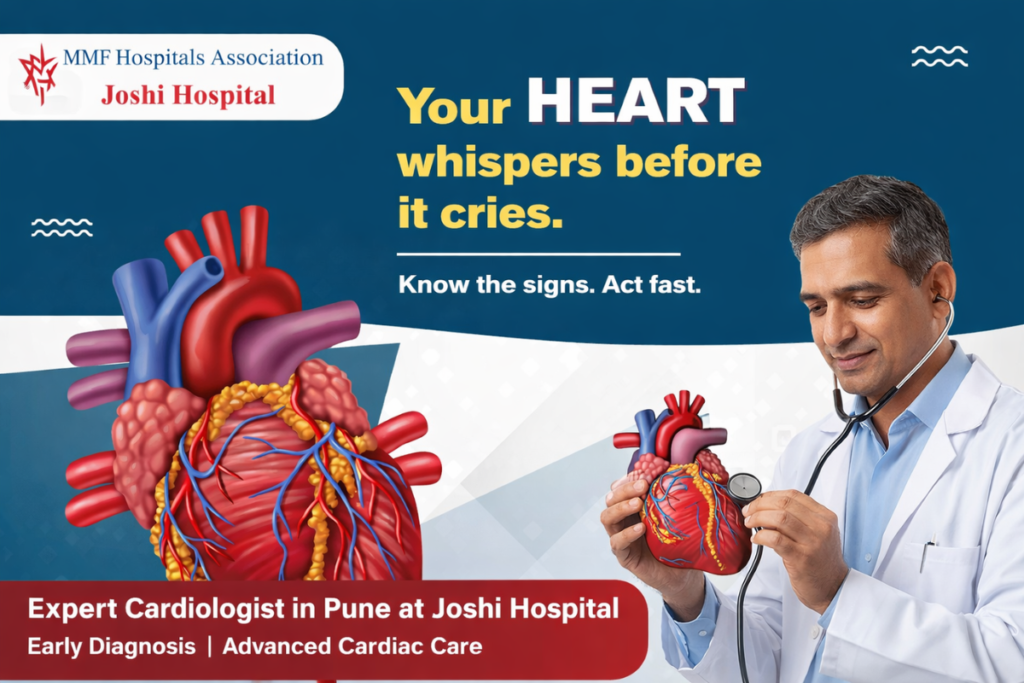
Heart problems rarely happen without warning. In many cases, the heart gives subtle signals long before a major cardiac event occurs. Recognizing these early signs can help you seek timely treatment and prevent serious complications.
At Joshi Hospital, experienced cardiologists focus on early diagnosis, preventive care, and advanced cardiac treatment to protect your heart health.
Why Listening to Your Heart Matters
Heart disease remains one of the leading causes of health complications worldwide. Many people ignore mild symptoms, assuming they are due to stress, fatigue, or indigestion. However, these “whispers” from your heart may indicate an underlying problem.
The cardiology department at Joshi Hospital provides specialized care using modern diagnostics and expert evaluation to detect heart conditions early and offer effective treatment plans.
Early Warning Signs Your Heart May Be Giving
Recognizing symptoms early can save lives. Watch out for these common signs:
1. Chest Discomfort or Pressure
A feeling of tightness, heaviness, or squeezing in the chest is one of the most common early symptoms of heart disease.
2. Shortness of Breath
Difficulty breathing during mild activity or at rest may indicate reduced heart function.
3. Fatigue or Weakness
Unusual tiredness without a clear reason could be a sign that your heart is not pumping efficiently.
4. Pain in Arm, Neck, or Jaw
Heart-related pain often spreads beyond the chest to other areas of the body.
5. Dizziness or Lightheadedness
Frequent dizziness may signal reduced blood flow to the brain.
6. Irregular Heartbeat
Palpitations or a racing heart should never be ignored.
If you notice any of these symptoms, consult a cardiologist immediately.
Common Risk Factors for Heart Disease
Understanding your risk level helps in prevention. Major risk factors include:
- High blood pressure
- Diabetes
- High cholesterol
- Smoking
- Obesity
- Sedentary lifestyle
- Family history of heart disease
- Chronic stress
Managing these factors significantly reduces your chances of developing heart problems.
When Should You Visit a Cardiologist?
You should consult a cardiologist if you:
- Experience chest pain or discomfort
- Have high blood pressure or diabetes
- Feel frequent fatigue or breathlessness
- Have a family history of heart disease
- Are above 40 and have never had a heart check-up
Regular cardiac check-ups help detect problems before they become life-threatening.
Advanced Cardiac Care at Joshi Hospital, Pune
Joshi Hospital offers comprehensive cardiac services delivered by experienced specialists.
Cardiology Services Include:
- ECG (Electrocardiogram)
- 2D Echo
- Treadmill Test (TMT)
- Heart disease screening
- Preventive cardiology
- Cardiac risk assessment
- Advanced cardiac procedures
The hospital features specialized cardiologists such as Dr. Nitin Patki, Dr. Amit Sinkar, and other experienced heart specialists dedicated to providing patient-focused cardiac care.
Tips to Keep Your Heart Healthy ❤️
Preventive care plays a major role in maintaining heart health.
Follow These Simple Steps:
✔ Eat a balanced, heart-friendly diet
✔ Exercise for at least 30 minutes daily
✔ Avoid smoking and alcohol
✔ Maintain a healthy weight
✔ Manage stress effectively
✔ Get regular health check-ups
Small lifestyle changes can make a big difference in protecting your heart.
Act Fast — Early Treatment Saves Lives
Remember, your heart rarely fails without warning. The earlier you identify symptoms and seek medical advice, the better your chances of preventing severe complications.
If you notice any unusual symptoms, don’t delay medical care.
Consult an experienced Cardiologist in Pune at Joshi Hospital for expert evaluation and personalized treatment.
Conclusion
Your heart speaks before it cries — you just need to listen. Early detection, timely consultation, and preventive care are the keys to maintaining lifelong heart health. With experienced cardiologists and advanced diagnostic services, Joshi Hospital provides reliable and compassionate cardiac care to help you stay healthy and active.