
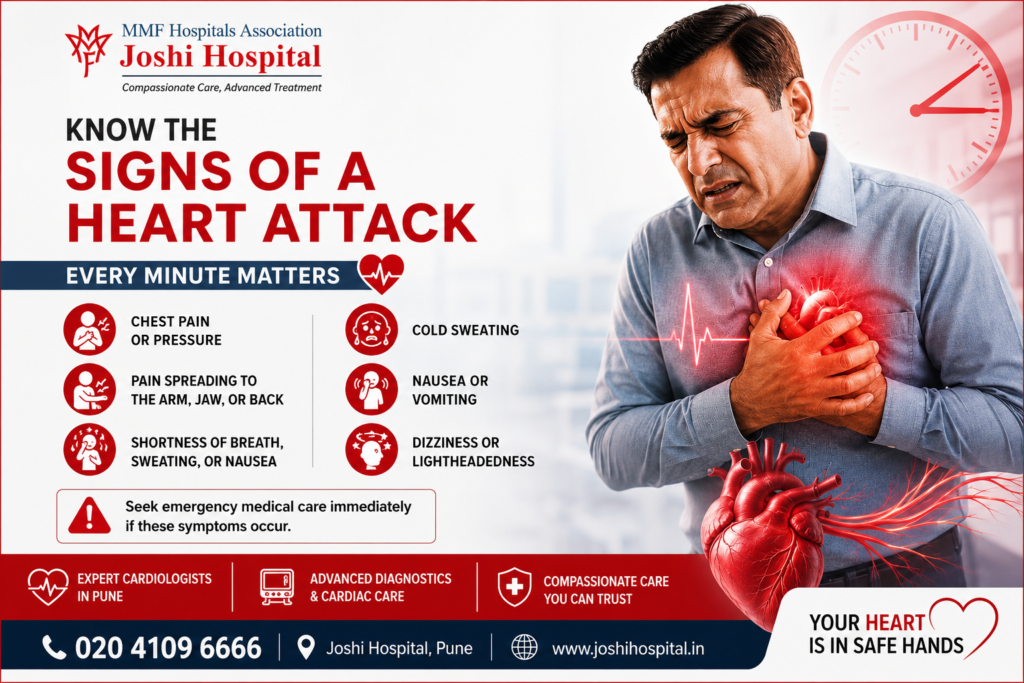
Heart disease is one of the leading causes of medical emergencies in India, and recognizing the warning signs of a heart attack can save a life. Many people ignore early symptoms, assuming they are due to acidity, indigestion, or fatigue. However, seeking immediate medical attention at the first sign of a heart attack can significantly improve recovery and reduce complications. At Joshi Hospital, our experienced cardiologists in Pune provide prompt diagnosis, advanced cardiac treatment, and comprehensive heart care to help patients receive timely, life-saving treatment.
What Is a Heart Attack?
A heart attack, medically known as myocardial infarction, occurs when the blood flow to a part of the heart muscle is blocked due to a clot or narrowing of the coronary arteries. Without adequate blood supply, the heart muscle begins to suffer damage. Immediate treatment is essential to restore blood flow and protect the heart.
Common Signs of a Heart Attack
Recognizing the symptoms early can make all the difference. Seek emergency medical care if you experience:
1. Chest Pain or Pressure
- Tightness, heaviness, squeezing, or pain in the chest
- Pain that lasts for several minutes or comes and goes
2. Pain Spreading to Other Areas
Discomfort may radiate to:
- Left or right arm
- Shoulder
- Neck
- Jaw
- Back
3. Shortness of Breath
Difficulty breathing may occur with or without chest pain.
4. Cold Sweating
Sudden sweating without physical activity can be an important warning sign.
5. Nausea or Vomiting
Some people, particularly women, may experience nausea, indigestion, or stomach discomfort.
6. Dizziness or Lightheadedness
Feeling faint or unusually weak should never be ignored.
These symptoms may vary between individuals, and some heart attacks present with subtle or “silent” symptoms.
Heart Attack Symptoms in Women
Women may experience symptoms that are less typical than chest pain, including:
- Extreme fatigue
- Shortness of breath
- Back or jaw pain
- Nausea
- Dizziness
- Mild chest discomfort
Because these symptoms can be mistaken for other illnesses, women should seek medical evaluation if they experience persistent or unusual discomfort.
Every Minute Matters
If you think someone is having a heart attack:
- Call emergency medical services immediately.
- Do not wait for symptoms to disappear.
- Keep the person calm and seated.
- Reach the nearest emergency cardiac care facility as quickly as possible.
The sooner treatment begins, the greater the chance of saving heart muscle and improving survival.
Risk Factors for Heart Disease
Several factors increase the risk of heart attacks, including:
- High blood pressure
- Diabetes
- High cholesterol
- Smoking or tobacco use
- Obesity
- Physical inactivity
- Family history of heart disease
- Chronic stress
- Excessive alcohol consumption
Regular health check-ups help detect these risk factors before they lead to serious complications.
Tips to Protect Your Heart
- Eat a heart-healthy diet rich in fruits, vegetables, and whole grains.
- Exercise for at least 30 minutes most days.
- Maintain a healthy weight.
- Quit smoking and avoid tobacco.
- Manage stress effectively.
- Monitor blood pressure, cholesterol, and blood sugar regularly.
- Follow your doctor’s advice regarding medications and lifestyle changes.
Advanced Cardiac Care at Joshi Hospital, Pune
At Joshi Hospital, we are committed to delivering comprehensive cardiac care with advanced diagnostic facilities and experienced specialists. Our team of cardiologists in Pune provides evaluation, prevention, emergency care, and long-term management for various heart conditions.
Our cardiac services include:
- Heart health check-ups
- ECG, 2D Echo, TMT, and Holter monitoring
- Hypertension management
- Treatment for coronary artery disease
- Heart failure management
- Preventive cardiology
- Emergency cardiac care
Whether you need a routine heart screening or urgent treatment, our heart specialists in Pune ensure personalized, evidence-based care for every patient.
Why Choose Joshi Hospital?
- Experienced heart specialists in Pune
- Modern diagnostic and cardiac monitoring facilities
- Comprehensive emergency cardiac services
- Patient-focused treatment approach
- Multidisciplinary care under one roof
- Trusted heart specialist hospital in Pune with advanced medical infrastructure
Frequently Asked Questions (FAQs)
1. What are the first signs of a heart attack?
Chest pain or pressure, pain spreading to the arm or jaw, shortness of breath, sweating, nausea, and dizziness are common early warning signs.
2. Can a heart attack occur without severe chest pain?
Yes. Some people, especially women, older adults, and people with diabetes, may experience mild or atypical symptoms.
3. How quickly should I seek treatment?
Immediately. Do not wait to see if symptoms improve. Prompt treatment greatly increases the chances of recovery.
4. Who should undergo regular heart check-ups?
Individuals over 40 years, people with diabetes, high blood pressure, high cholesterol, obesity, smoking history, or a family history of heart disease should have regular cardiac evaluations.
5. Does Joshi Hospital provide comprehensive cardiac care?
Yes. Joshi Hospital offers complete cardiac evaluation, preventive care, diagnostic services, emergency treatment, and ongoing heart disease management by experienced cardiologists.