
Joshi Hospital

Author: event

event

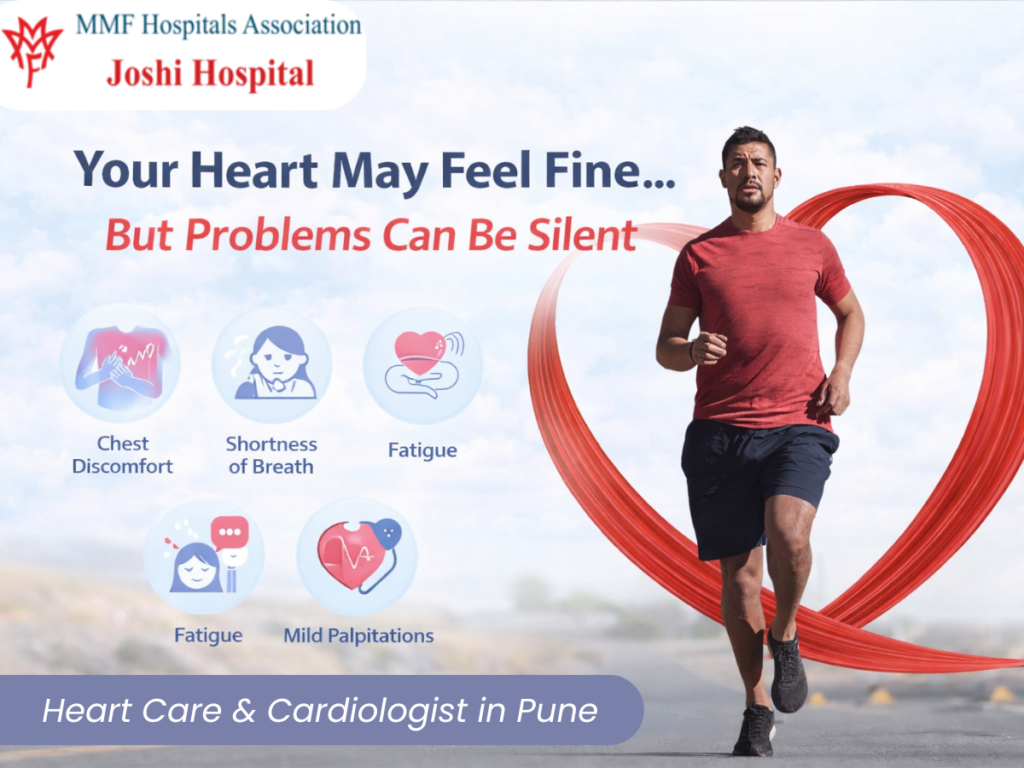
Your Heart May Feel Fine… But Problems Can Be Silent

Many people believe that if they feel fine, their heart is healthy. However, heart disease often develops silently without noticeable symptoms until it becomes severe. The message is simple but powerful: your heart may feel fine, but underlying problems can still exist. At Joshi Hospital, Pune, our expert cardiologists emphasize early detection and preventive care to protect your heart health. Why Heart Problems Can Go Unnoticed Heart disease does not always present obvious symptoms in its early stages. Conditions like blocked arteries, high blood pressure, and cholesterol buildup can progress quietly over time. You may feel completely normal while your heart is under stress. Common Silent Heart Conditions Some heart problems that often show no early symptoms include: Coronary artery disease (CAD) High blood pressure (Hypertension) High cholesterol levels Early-stage heart failure These conditions can slowly damage your heart without warning signs. Subtle Signs You Shouldn’t Ignore Even when symptoms are mild, they can indicate underlying heart issues: Slight chest discomfort during activity Shortness of breath while walking or climbing stairs Fatigue without a clear reason Occasional dizziness Mild palpitations Ignoring these signs can increase the risk of serious complications like heart attack. Who is at Higher Risk? You may be at higher risk of silent heart disease if you have: Diabetes High blood pressure Smoking habits Obesity Sedentary lifestyle Family history of heart disease Importance of Regular Heart Check-ups Routine health check-ups can detect problems before symptoms appear. At Joshi Hospital, we recommend: ECG and 2D Echo Stress tests Blood pressure monitoring Cholesterol screening Early diagnosis leads to better treatment outcomes. How to Keep Your Heart Healthy Simple lifestyle changes can significantly reduce your risk: Exercise regularly (like walking or jogging) Eat a heart-healthy diet Manage stress Quit smoking Maintain a healthy weight Monitor BP and sugar levels Expert Cardiac Care at Joshi Hospital, Pune Joshi Hospital offers advanced cardiology services including: Preventive heart screenings Diagnosis and management of heart conditions Personalized treatment plans Emergency cardiac care Our experienced cardiologists in Pune are committed to helping you lead a healthier life. Conclusion Feeling fine doesn’t always mean your heart is healthy. Silent heart conditions can develop without warning, making regular check-ups essential. Don’t wait for symptoms to appear. Take proactive steps today—visit Joshi Hospital, Pune and consult an expert cardiologist for a complete heart evaluation.
When Should You See a General Physician? Signs You Shouldn’t Ignore

Your health often gives subtle warning signs before a condition becomes serious. Unfortunately, many people tend to ignore these symptoms or delay visiting a doctor. A general physician plays a crucial role in early diagnosis, preventive care, and overall health management. At Joshi Hospital, Pune, our experienced general physicians provide comprehensive and personalized care to help you stay healthy and detect illnesses early. Who is a General Physician? A general physician is a medical expert who diagnoses and treats a wide range of common health conditions. They are usually the first point of contact for any health concern and guide you to the right specialist if needed. When Should You See a General Physician? 1. Persistent Fever If you have a fever lasting more than 2–3 days, it may indicate infections such as viral fever, dengue, or typhoid and requires medical evaluation. 2. Frequent Headaches Occasional headaches are common, but regular or severe headaches could be linked to stress, migraine, or underlying health issues. 3. Unexplained Fatigue Constant tiredness without a clear reason may be a sign of anemia, thyroid disorders, diabetes, or infections. 4. Digestive Issues Symptoms like acidity, bloating, constipation, diarrhea, or abdominal pain should not be ignored if they persist. 5. Sudden Weight Loss or Gain Unintentional changes in weight can indicate metabolic or hormonal problems. 6. High Blood Pressure or Blood Sugar Levels Regular monitoring is essential. If readings are consistently high, consult a physician for proper management. 7. Respiratory Problems Persistent cough, cold, breathlessness, or chest discomfort may signal infections or chronic lung conditions. 8. Skin Problems or Allergies Rashes, itching, or allergic reactions may require medical treatment to prevent complications. 9. Body Pain or Joint Pain Chronic pain in muscles or joints can affect daily life and may indicate arthritis or other conditions. 10. General Health Check-up Even without symptoms, regular health check-ups help detect diseases early and maintain overall well-being. Why Early Consultation is Important Prevents minor issues from becoming serious Ensures early diagnosis of chronic diseases Helps in timely treatment and faster recovery Reduces the risk of complications Benefits of Visiting a General Physician at Joshi Hospital, Pune Comprehensive diagnosis and treatment Personalized healthcare plans Access to advanced diagnostic facilities Guidance for specialist referrals if needed Tips to Maintain Good Health Eat a balanced and nutritious diet Stay physically active Drink adequate water Get enough sleep Avoid self-medication Schedule regular check-ups Conclusion Ignoring early symptoms can lead to serious health complications. A general physician is your first line of defense in maintaining good health. Timely consultation can help detect and treat conditions before they worsen. If you are experiencing any unusual symptoms or simply want a routine check-up, visit Joshi Hospital, Pune and consult an experienced general physician in Pune for expert care.

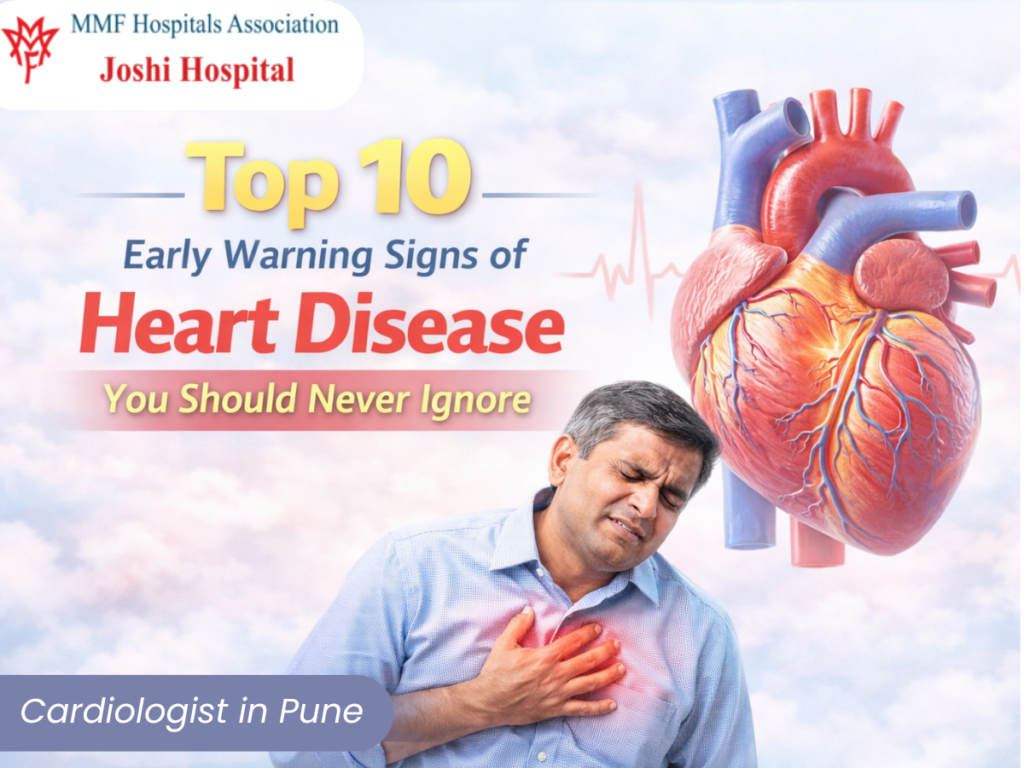
Top 10 Early Warning Signs of Heart Disease You Should Never Ignore

Heart disease is one of the leading causes of death worldwide, but the good news is that many serious cardiac conditions can be prevented with early detection and timely treatment. Recognizing the warning signs early can save your life. At Joshi Hospital, Pune, our experienced cardiology team emphasizes awareness, early diagnosis, and advanced treatment to ensure better heart health outcomes. Why Early Detection of Heart Disease Matters Heart conditions often develop silently over time. Many people ignore mild symptoms, assuming they are temporary or due to stress. However, these early signs may indicate underlying heart problems that require immediate medical attention. Top 10 Early Warning Signs of Heart Disease 1. Chest Pain or Discomfort One of the most common symptoms of heart disease is chest pain, also known as angina. It may feel like pressure, tightness, or burning in the chest. 2. Shortness of Breath  If you experience difficulty breathing even during mild activities or at rest, it could signal  heart issues such as heart failure or blocked arteries. 3. Fatigue or Weakness Unusual tiredness, especially after routine activities, may indicate reduced blood flow to the heart. 4. Pain in Neck, Jaw, Shoulder, or Arm Heart-related pain can radiate beyond the chest, especially to the left arm, neck, jaw, or back. 5. Irregular Heartbeat (Palpitations) A racing, fluttering, or irregular heartbeat may be a sign of arrhythmia or other cardiac conditions. 6. Swelling in Legs, Ankles, or Feet Fluid buildup due to poor heart function can cause swelling in the lower body. 7. Dizziness or Lightheadedness Feeling faint or dizzy may indicate reduced blood flow to the brain due to heart problems. 8. Persistent Cough or Wheezing A chronic cough, especially with white or pink mucus, can be linked to heart failure. 9. Excessive Sweating Sudden cold sweats without physical exertion can be an early sign of a heart attack. 10. Nausea or Loss of Appetite Digestive discomfort, nausea, or lack of appetite can sometimes be associated with heart disease. When Should You See a Cardiologist? You should consult a cardiologist immediately if you experience: Chest discomfort or pain Shortness of breath Sudden fatigue or dizziness Irregular heartbeat Early consultation can prevent serious complications like heart attack or stroke. Heart Disease Risk Factors Understanding your risk can help in prevention. Common risk factors include: High blood pressure Diabetes Smoking Obesity Sedentary lifestyle Family history of heart disease Tips to Keep Your Heart Healthy Eat a balanced, heart-healthy diet Exercise regularly (at least 30 minutes daily) Manage stress effectively Avoid smoking and limit alcohol Get regular health check-ups Expert Heart Care at Joshi Hospital, Pune Joshi Hospital is a trusted center for advanced cardiac care in Pune, offering: Comprehensive heart check-ups Diagnostic services (ECG, Echo, stress tests) Preventive cardiology Personalized treatment plans Our experienced cardiologists in Pune are dedicated to providing compassionate and evidence-based care. Conclusion Ignoring early symptoms of heart disease can be dangerous. Paying attention to your body and seeking timely medical advice can make a significant difference. If you notice any of these warning signs, don’t delay—consult a heart specialist at Joshi Hospital, Pune for expert evaluation and care.