
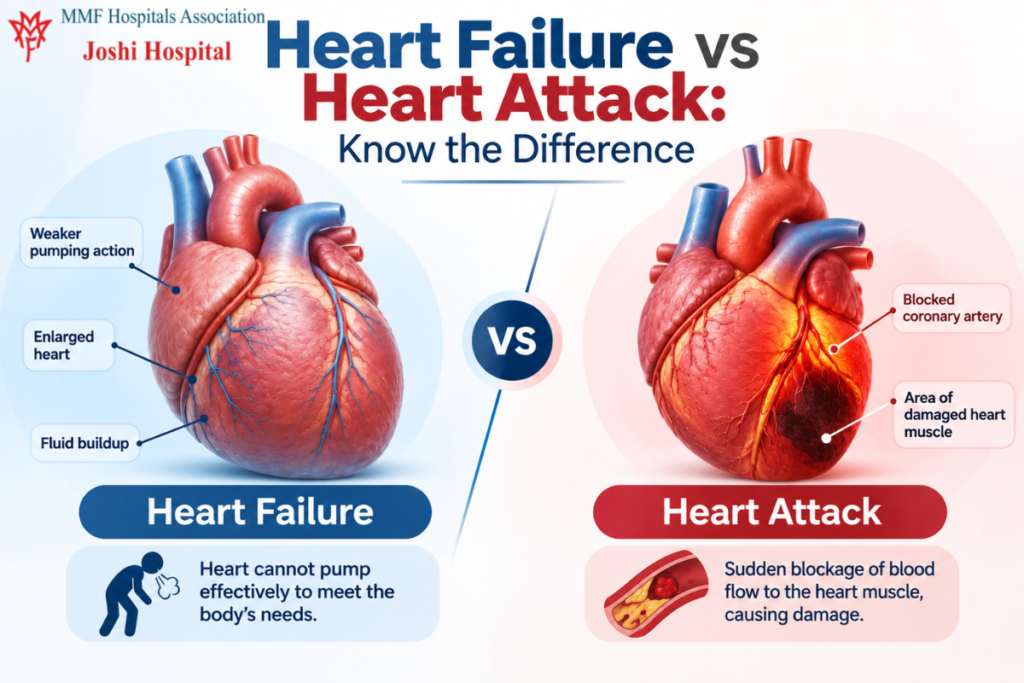
The terms heart attack and heart failure are sometimes used interchangeably in everyday conversation, but medically, they describe two different conditions.
A heart attack usually occurs when blood flow to part of the heart muscle is suddenly reduced or blocked. Heart failure, on the other hand, means the heart is unable to pump or fill with blood well enough to meet the body’s needs.
There is also an important connection between them: a heart attack can damage the heart muscle and may contribute to heart failure in some patients.
Understanding the difference can help people recognize warning signs and know when urgent medical attention may be necessary.
At Joshi Hospital, Pune, patient education is an important part of cardiovascular care because recognizing symptoms early can help patients seek appropriate medical evaluation without unnecessary delay.
What Is a Heart Attack?
A heart attack, medically known as a myocardial infarction, occurs when a portion of the heart muscle does not receive enough blood.
A common underlying reason is coronary artery disease, in which fatty deposits called plaque build up inside the coronary arteries. If a plaque ruptures and a blood clot forms, blood flow through the artery can become severely restricted or completely blocked.
Without adequate blood and oxygen, heart muscle can become damaged. The longer significant blood-flow interruption continues, the greater the potential for heart-muscle injury.
This is why a suspected heart attack should be treated as a medical emergency.
Common Warning Signs of a Heart Attack
Heart attack symptoms are not identical in every person. Some heart attacks begin suddenly with severe symptoms, while others may begin more gradually.
Possible warning signs include:
- Pressure, squeezing, heaviness, fullness or discomfort in the chest
- Pain or discomfort spreading to one or both arms
- Discomfort in the shoulder, back, neck or jaw
- Shortness of breath
- Cold sweating
- Nausea or vomiting
- Light-headedness or faintness
- Unusual weakness or fatigue
Women may sometimes report additional symptoms such as unusual tiredness, nausea, upper-back discomfort or shortness of breath, although chest discomfort remains an important heart-attack symptom.
Do not try to diagnose a suspected heart attack at home. New or concerning symptoms require prompt medical assessment.
What Is Heart Failure?
Despite its name, heart failure does not mean that the heart has completely stopped working.
It means the heart is not pumping enough blood for the body’s needs or is having difficulty filling properly.
Heart failure can develop gradually over months or years, although it can sometimes worsen suddenly.
When the heart cannot circulate blood efficiently, people may experience fatigue and breathlessness. Fluid may also accumulate in the lungs, legs, ankles or other parts of the body.
Common Symptoms of Heart Failure
Symptoms depend on the type and severity of heart failure.
Common symptoms can include:
- Shortness of breath during activity
- Breathlessness while resting or lying flat
- Persistent tiredness or weakness
- Reduced ability to exercise or perform routine activities
- Swelling of the feet, ankles or legs
- Persistent cough or wheezing
- Rapid or irregular heartbeat
- Fluid-related weight gain
- Reduced appetite or nausea
- Difficulty sleeping because of breathlessness
A person who previously climbed stairs comfortably but gradually starts becoming unusually breathless or tired may need cardiovascular evaluation.
Similarly, increasing ankle swelling or difficulty breathing while lying flat should not simply be attributed to ageing without appropriate medical assessment.
Heart Attack vs Heart Failure: The Main Difference
The simplest way to understand the distinction is:
Heart Attack = A blood-flow problem affecting the heart muscle
Heart Failure = A problem with the heart’s ability to pump or fill effectively
A heart attack is generally an acute event requiring urgent treatment.
Heart failure is often a long-term clinical condition, although sudden deterioration can occur and may also require emergency care.
Can a Heart Attack Cause Heart Failure?
Yes, it can.
When a heart attack damages a significant portion of heart muscle, the affected heart may become less effective at pumping blood.
Over time, this damage can contribute to the development of heart failure.
However, not everyone who experiences a heart attack develops heart failure, and heart attacks are not the only cause of heart failure.
What Else Can Cause Heart Failure?
Heart failure can develop because of several underlying cardiovascular conditions.
These may include:
- Coronary artery disease
- Previous heart attack
- Long-standing high blood pressure
- Heart muscle disease or cardiomyopathy
- Heart valve disorders
- Certain abnormal heart rhythms
- Some congenital heart conditions
- Other medical conditions that damage or place excessive strain on the heart
Identifying the underlying cause is important because heart failure treatment is not identical for every patient.
How Are Heart Attack and Heart Failure Diagnosed?
Because symptoms can overlap with other medical conditions, diagnosis should be based on medical assessment rather than symptoms alone.
Evaluating a Suspected Heart Attack
Depending on the clinical situation, doctors may use:
Electrocardiogram (ECG):
Records the heart’s electrical activity and may identify changes associated with a heart attack.
Blood Tests:
Cardiac troponin testing can help identify injury to heart muscle.
Echocardiography:
May be used to evaluate heart function and how different areas of the heart are moving.
Coronary Angiography:
In appropriate cases, angiography can identify significant narrowing or blockage in coronary arteries and help guide treatment.
Evaluating Suspected Heart Failure
Evaluation may include:
Medical History and Examination:
Symptoms, previous heart conditions and risk factors are reviewed.
Echocardiography:
An important test used to assess the structure and function of the heart.
Blood Tests:
Tests may include BNP or NT-proBNP in appropriate clinical situations, as well as assessment of kidney function and other relevant parameters.
ECG and Chest Imaging:
These may provide additional information depending on symptoms and clinical findings.
Not every patient requires every test. Investigations are selected according to the individual’s presentation.
Is Ejection Fraction Important in Heart Failure?
Yes, but it is only one part of the assessment.
Ejection fraction (EF) measures the proportion of blood pumped out of the heart’s main pumping chamber during each contraction.
Some patients have heart failure with a reduced ejection fraction, while others can have symptoms of heart failure even when their ejection fraction is relatively preserved.
This is why a normal-looking EF number alone should not be used to rule out heart failure without considering the patient’s symptoms, examination and other investigations.
How Is a Heart Attack Treated?
Treatment depends on the type of heart attack, coronary anatomy, timing, overall health and other clinical factors.
Management may involve medicines and, when indicated, procedures to restore blood flow such as coronary angioplasty with stent placement. Some patients with particular patterns of coronary artery disease may require bypass surgery.
Because heart-muscle damage can increase when blood flow remains interrupted, early assessment is particularly important when a heart attack is suspected.
How Is Heart Failure Treated?
Heart failure treatment depends on its cause, type, severity and the patient’s overall medical condition.
Management may involve:
- Evidence-based medications
- Blood pressure management
- Diabetes and cholesterol management where appropriate
- Management of excess fluid
- Appropriate dietary and lifestyle measures
- Treatment of underlying coronary artery or valve disease
- Selected cardiac devices or procedures
- Regular monitoring and follow-up
Patients should not change or stop heart medications without discussing the decision with their treating doctor.
Can Someone Have Both Conditions?
Yes.
Heart attack and heart failure are different diagnoses, but they can occur in the same patient.
For example, a person may have a heart attack that damages the heart muscle and subsequently develops heart failure.
Alternatively, someone with established heart failure may later experience a heart attack.
This relationship is one reason why long-term cardiovascular follow-up can remain important even after treatment of an acute cardiac event.
When Should You Seek Emergency Medical Care?
Seek immediate emergency medical attention for symptoms suggestive of a heart attack, particularly new or persistent chest pressure or discomfort associated with:
- Shortness of breath
- Cold sweating
- Nausea
- Faintness or severe dizziness
- Pain or discomfort spreading to the arm, shoulder, back, neck or jaw
Patients with known or suspected heart failure also need urgent assessment if they develop severe or rapidly worsening breathlessness, fainting, significant chest discomfort, confusion, or other sudden deterioration.
When serious cardiac symptoms are present, it is safer to seek emergency medical evaluation rather than waiting to see whether the symptoms disappear.
Protecting Your Heart Starts With Understanding the Warning Signs
The most important difference to remember is simple:
A heart attack involves an interruption of blood supply to heart muscle, while heart failure means the heart cannot pump or fill effectively enough to meet the body’s needs.
Both are serious cardiovascular conditions, but their causes, progression and treatment can be very different.
Recognizing changes such as chest discomfort, unexplained breathlessness, reduced exercise capacity, unusual fatigue or swelling can help patients seek appropriate medical advice earlier.
Heart Evaluation at Joshi Hospital, Pune
At Joshi Hospital, Pune, patients experiencing cardiovascular symptoms can seek medical evaluation to understand the possible cause of their symptoms and the appropriate next steps.
Symptoms alone cannot reliably determine whether someone has heart failure, a heart attack or another medical condition. A proper diagnosis requires clinical assessment and, where appropriate, investigations such as an ECG, blood tests, echocardiography or other cardiac tests.
If you have ongoing breathlessness, unexplained fatigue, swelling of the legs or other concerns about your heart health, consider discussing them with a qualified healthcare professional.
For sudden chest discomfort, severe breathlessness, fainting or symptoms suggestive of a heart attack, seek emergency medical care immediately.