
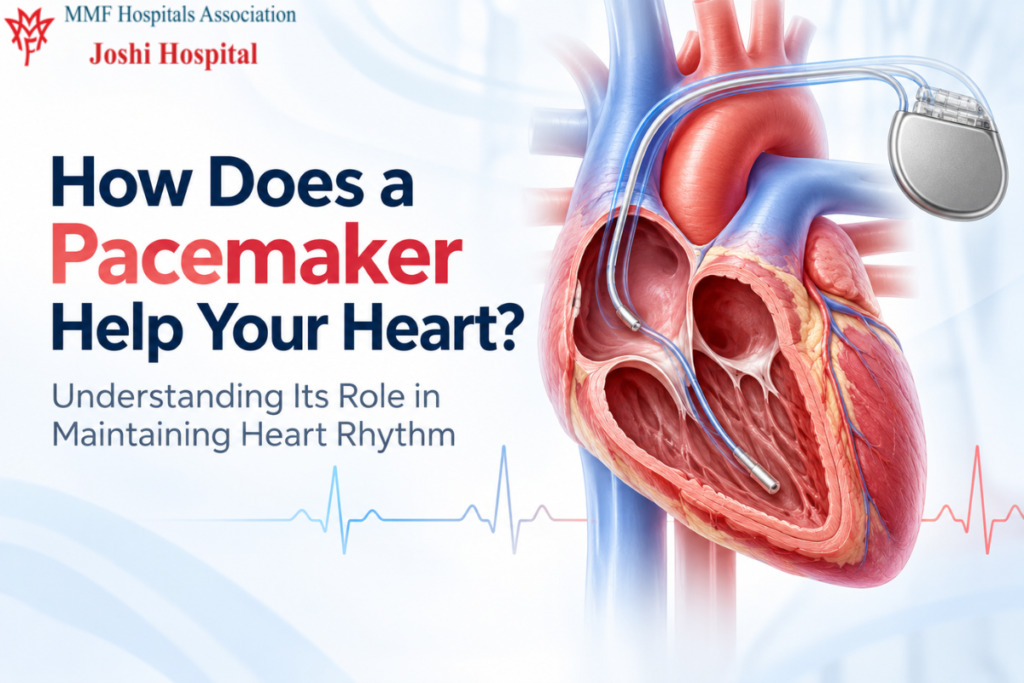
The heart works continuously by maintaining a regular rhythm that allows blood to circulate throughout the body. However, certain heart rhythm disorders can cause the heartbeat to become too slow, irregular, or inefficient. In such situations, a pacemaker can help support the heart’s electrical system and maintain a more regular heartbeat.
A pacemaker is a small medical device placed under the skin that sends electrical impulses to the heart when needed. It helps manage specific rhythm problems and allows many patients to continue their daily activities with improved confidence and safety.
For individuals looking for advanced cardiac evaluation and treatment, Joshi Hospital, Maharashtra Medical Foundation provides comprehensive healthcare support with experienced medical professionals and patient-focused care.
What Is a Pacemaker?
A pacemaker is a small electronic device designed to regulate the heartbeat. It consists of:
- Pulse generator: A small battery-powered unit that creates electrical signals.
- Leads (wires): Thin wires placed near the heart muscle to deliver electrical impulses.
The pacemaker monitors the heart’s rhythm and provides stimulation when the heart rate becomes too slow or irregular.
How Does a Pacemaker Help the Heart?
The heart has a natural electrical system that controls each heartbeat. Sometimes, problems with this system can affect the heart’s ability to maintain a normal rhythm.
A pacemaker helps by:
1. Maintaining a Regular Heartbeat
If the heart beats too slowly (bradycardia), the pacemaker sends electrical signals to encourage the heart to beat at an appropriate rate.
2. Improving Blood Circulation
A steady heartbeat helps the heart pump blood effectively to organs and tissues throughout the body.
3. Reducing Symptoms Related to Slow Heart Rhythm
Some patients with rhythm disorders may experience:
- Dizziness
- Fatigue
- Shortness of breath
- Fainting episodes
- Reduced exercise capacity
By supporting heart rhythm, a pacemaker may help improve daily functioning.
When Is a Pacemaker Recommended?
A cardiologist may recommend a pacemaker after evaluating the patient’s heart rhythm, symptoms, and medical history.
Common conditions where a pacemaker may be considered include:
1. Bradycardia (Slow Heart Rate)
When the heart beats slower than normal and cannot supply adequate blood flow, a pacemaker may help regulate the rhythm.
2. Heart Block
Heart block occurs when electrical signals from the upper chambers of the heart do not properly reach the lower chambers.
3. Certain Rhythm Disorders
Some abnormal heart rhythms affecting the heart’s electrical system may require pacemaker support.
4. Age-Related Changes in the Heart’s Electrical System
In some older adults, the natural conduction system of the heart may become less effective over time.
What Happens During Pacemaker Implantation?
Pacemaker implantation is usually performed by a cardiac specialist under local anaesthesia.
The general steps include:
- A small incision is made near the collarbone area.
- Leads are guided through a blood vessel into the heart.
- The pacemaker device is placed under the skin.
- The device is tested to ensure proper functioning.
- The incision is closed.
The exact procedure and recovery period may vary depending on the patient’s health condition.
Benefits of Having a Pacemaker
A pacemaker can provide several benefits for suitable patients, including:
✔ Helps maintain a stable heart rhythm
✔ Supports normal heart function
✔ May reduce symptoms caused by slow heartbeat
✔ Helps patients return to daily activities after recovery
✔ Provides long-term rhythm support when required
The decision to implant a pacemaker is always based on individual evaluation by a qualified cardiologist.
Life After Pacemaker Implantation
Many patients with pacemakers can lead active and fulfilling lives. However, regular follow-up is important to monitor device function.
Patients are generally advised to:
- Attend scheduled pacemaker check-ups
- Follow medication instructions if prescribed
- Inform healthcare providers about their pacemaker before procedures
- Maintain a heart-healthy lifestyle
- Monitor any new symptoms
Frequently Asked Questions (FAQs)
1. Does a pacemaker cure heart disease?
A pacemaker helps manage certain heart rhythm problems. It does not cure all heart conditions but supports the heart’s electrical function.
2. How long does a pacemaker last?
The battery life depends on the type of device, usage, and patient condition. Regular monitoring helps determine when replacement may be needed.
3. Can a person live normally with a pacemaker?
Yes, many people with pacemakers return to their normal routines after recovery and regular medical follow-up.
4. Is pacemaker implantation a major surgery?
Pacemaker implantation is a commonly performed procedure. The suitability and risks depend on individual health factors and should be discussed with a cardiologist.
Why Choose Joshi Hospital, Maharashtra Medical Foundation for Heart Care?
Choosing the right healthcare facility is important for diagnosis, treatment planning, and long-term heart management.
Joshi Hospital, Maharashtra Medical Foundation focuses on providing patient-centred medical care with appropriate evaluation, advanced facilities, and expert guidance for various cardiac conditions.
Patients experiencing symptoms related to irregular heartbeat or rhythm problems should seek timely medical advice for proper diagnosis and management.
Conclusion
A pacemaker plays an important role in supporting patients with certain heart rhythm disorders by helping maintain a steady heartbeat. Early evaluation, accurate diagnosis, and regular follow-up can help patients manage heart rhythm conditions effectively.
If you experience symptoms such as dizziness, fainting, unusual fatigue, or irregular heartbeat, consult a healthcare professional for appropriate assessment.
For cardiac evaluation and treatment guidance, connect with Joshi Hospital, Maharashtra Medical Foundation.