Joshi Hospital

Category: Neurology

Neurology

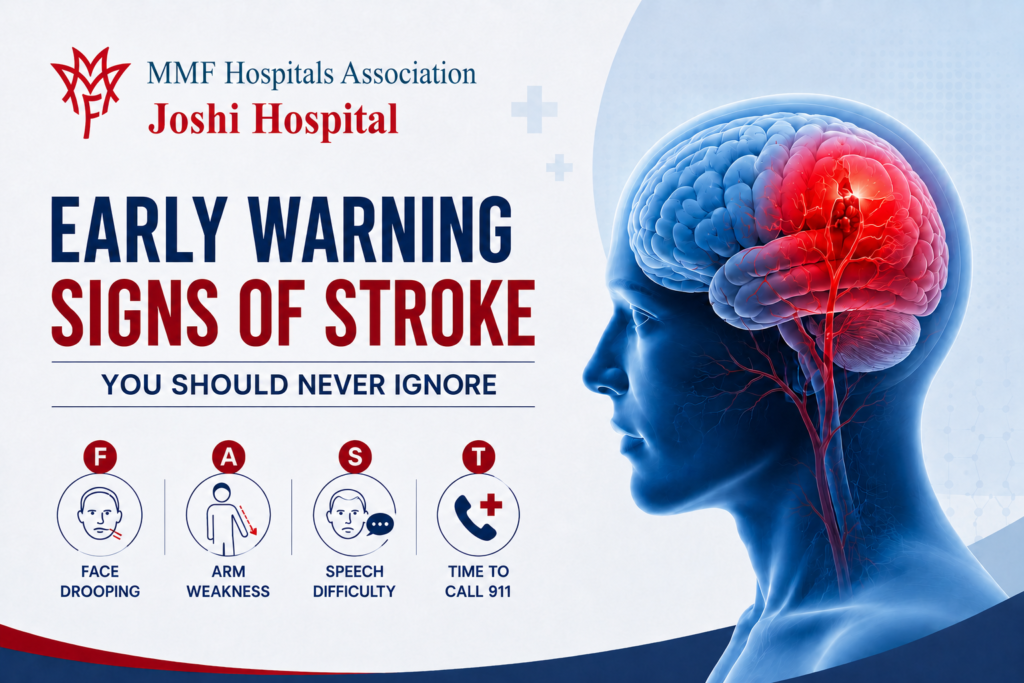
Early warning signs of stroke infographic by MMF Hospitals Association’s Joshi Hospital in Pune

Early Warning Signs of Stroke You Should Never Ignore

A stroke is a medical emergency that can happen when blood flow to part of the brain is blocked or when a blood vessel in the brain bursts. Because brain cells can be damaged within minutes, recognizing the early warning signs of stroke and seeking emergency medical care quickly is extremely important. At Joshi Hospital, Neuro Specialist Hospital in Pune, patients can access specialist neurological evaluation and medical care for stroke-related conditions. If you or someone around you develops sudden neurological symptoms, do not wait for them to improve on their own. Seek emergency medical attention immediately. What Is a Stroke? A stroke occurs when part of the brain does not receive enough blood and oxygen or when bleeding occurs inside or around the brain. The two main types are: Ischemic stroke: Caused by a blockage in a blood vessel supplying the brain. Hemorrhagic stroke: Caused by bleeding from a ruptured blood vessel in or around the brain. Both types require urgent medical assessment and treatment. Early Warning Signs of Stroke Stroke symptoms often appear suddenly. Knowing the warning signs can help you act quickly. 1. Sudden Weakness or Numbness Sudden weakness, numbness or loss of sensation in the face, arm or leg, particularly on one side of the body, can be an important warning sign of stroke. For example, a person may suddenly find it difficult to lift one arm or may notice that one side of the face feels weak. 2. Sudden Difficulty Speaking A person experiencing a stroke may suddenly have: Slurred speech Difficulty finding the right words Trouble understanding what others are saying Difficulty communicating clearly Sudden speech problems should never be ignored. 3. Facial Drooping Ask the person to smile. If one side of the face appears to droop or the smile becomes uneven, it may indicate a neurological emergency. 4. Sudden Vision Problems Stroke can affect the areas of the brain responsible for vision. Sudden blurred or double vision, loss of vision in one or both eyes, or other sudden visual disturbances require immediate medical evaluation. 5. Sudden Severe Headache A sudden, severe headache that is unusual for the person, particularly when accompanied by vomiting, confusion, loss of consciousness or neurological symptoms, can be a warning sign of a serious condition, including hemorrhagic stroke. 6. Sudden Dizziness or Loss of Balance Unexpected dizziness, difficulty walking, loss of coordination or problems maintaining balance can sometimes occur during a stroke, particularly when certain areas of the brain are affected. 7. Sudden Confusion Sudden confusion, difficulty understanding simple instructions, unusual behavior or problems with memory can be signs that the brain is not functioning normally. Remember FAST One of the simplest ways to remember common stroke warning signs is FAST: F – Face: Does one side of the face droop? A – Arms: Is one arm weak or numb? S – Speech: Is speech slurred or difficult to understand? T – Time: Time is critical. Seek emergency medical help immediately. If any of these symptoms appear suddenly, do not wait to see whether they disappear. Why Immediate Stroke Treatment Matters Stroke can cause permanent brain injury and may result in problems with movement, speech, memory, vision and daily activities. Early medical assessment helps doctors determine the type of stroke and identify the appropriate treatment. Treatment depends on several factors, including: Type of stroke Location and extent of brain involvement Time since symptoms began Overall health Other medical conditions and medications Some treatments are time-sensitive, which is why reaching an appropriate emergency medical facility as soon as possible is crucial. Can Stroke Symptoms Go Away on Their Own? Sometimes stroke-like symptoms may disappear after a short period. This can occur with a transient ischemic attack (TIA), often called a mini-stroke. Even when symptoms disappear, a TIA should not be ignored. It can be a warning that a major stroke may occur in the future. Prompt medical evaluation is important to identify possible causes and reduce future risk. Who May Be at Higher Risk of Stroke? Stroke can affect anyone, but certain factors can increase the risk, including: High blood pressure Diabetes High cholesterol Smoking or tobacco use Obesity Heart conditions such as atrial fibrillation Previous stroke or TIA Increasing age Physical inactivity Certain family and medical histories Managing these risk factors through appropriate medical care and lifestyle changes can help reduce stroke risk. What Should You Do If You Notice Stroke Symptoms? If you notice sudden facial weakness, arm weakness, speech difficulty, vision problems, severe unexplained headache, dizziness or confusion: Treat the symptoms as an emergency. Seek emergency medical care immediately. Note the approximate time the symptoms started or the last time the person was known to be well. Do not wait for the symptoms to disappear. Avoid delaying medical care by trying home remedies. Neurological Care at Joshi Hospital Joshi Hospital, Neurology Hospital in Pune, provides medical care across multiple specialties, including neurological evaluation and treatment. If you are looking for a neurologist in Pune for neurological symptoms, headaches, dizziness, seizures, stroke-related concerns or other nervous system conditions, timely consultation can help with appropriate diagnosis and management. For sudden symptoms suggestive of stroke, however, emergency medical attention should take priority over arranging a routine outpatient appointment. Conclusion Recognizing the early warning signs of stroke can make a critical difference. Sudden facial drooping, weakness or numbness, speech difficulties, vision changes, severe headache, dizziness, loss of balance or confusion should never be ignored. If you suspect a stroke, seek emergency medical care immediately. Early assessment and treatment can help reduce the risk of serious complications and long-term disability.     Medical Disclaimer: This article is intended for general health education and should not replace professional medical advice. Stroke symptoms require urgent medical evaluation.

Early Warning Signs of Stroke You Should Never Ignore Read More »
Migraine vs Normal Headache | Migraine Treatment in Pune | Joshi Hospital

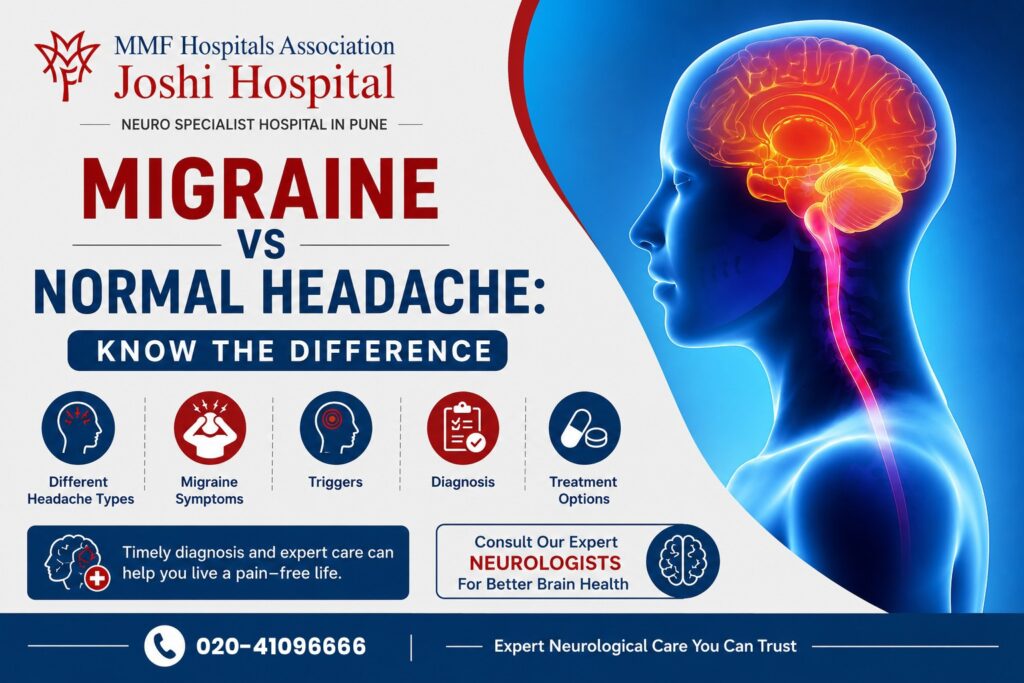
Migraine vs Normal Headache: Know the Difference

Headaches are one of the most common health complaints, but not every headache is the same. While a normal headache may resolve with rest or hydration, migraines are a neurological condition that can significantly affect daily life. Recognizing the difference between a migraine and a regular headache is essential for timely diagnosis and effective treatment. If you experience frequent or severe headaches, consulting an experienced Neurologist in Pune can help identify the underlying cause and recommend the right treatment plan. Different Types of Headaches Headaches can occur for various reasons and vary in intensity and duration. 1. Tension Headache The most common type of headache, usually caused by stress, fatigue, poor posture, or muscle tension. Symptoms: Dull, aching pain Tightness around the forehead or back of the head Mild to moderate intensity Usually affects both sides of the head 2. Migraine Migraine is a neurological disorder that causes recurrent episodes of moderate to severe headaches, often accompanied by other symptoms. Symptoms: Throbbing or pulsating pain Usually affects one side of the head Lasts from 4 to 72 hours Worsens with physical activity 3. Cluster Headache These are rare but extremely painful headaches that occur in clusters over weeks or months. Symptoms: Severe pain around one eye Red or watery eyes Nasal congestion Short but intense attacks 4. Sinus Headache Occurs due to sinus infections or inflammation. Symptoms: Pain around the cheeks, forehead, and eyes Facial pressure Nasal congestion Fever in some cases Migraine vs Normal Headache Feature Normal Headache Migraine Pain Type Dull, constant Throbbing or pulsating Location Both sides of the head Usually one side Severity Mild to moderate Moderate to severe Duration 30 minutes to a few hours 4 to 72 hours Nausea Rare Common Light and Sound Sensitivity Usually absent Very common Daily Activities Usually manageable Often difficult to continue Common Migraine Symptoms Migraine symptoms vary from person to person but commonly include: Severe throbbing headache Pain on one side of the head Nausea and vomiting Sensitivity to bright lights Sensitivity to loud sounds Blurred vision Dizziness Fatigue Difficulty concentrating Some individuals may experience an aura before the migraine begins, including: Flashing lights Blind spots Tingling sensations Temporary speech difficulty Common Migraine Triggers Migraine attacks can be triggered by various factors, including: Emotional stress Lack of sleep Hormonal changes Skipping meals Dehydration Bright lights Strong smells Loud noise Weather changes Certain foods such as chocolate, processed foods, aged cheese, and caffeine Identifying personal triggers can help reduce the frequency of migraine attacks. How is Migraine Diagnosed? An experienced Neurologist in Pune will diagnose migraines based on: Detailed medical history Description of headache symptoms Frequency and duration of attacks Physical and neurological examination Family history If necessary, additional investigations may include: MRI Brain CT Scan Blood tests Other neurological evaluations to rule out serious conditions Early diagnosis helps prevent complications and improves long-term management. Migraine Treatment Options At Joshi Hospital, migraine treatment focuses on reducing pain, preventing future attacks, and improving quality of life. Medications Pain-relieving medicines Anti-migraine medications Preventive medications for frequent migraines Lifestyle Modifications Regular sleep schedule Healthy diet Staying hydrated Stress management Regular exercise Avoiding known triggers Advanced Neurological Care Patients with chronic or severe migraines may benefit from specialized neurological evaluation and individualized treatment plans. When Should You See a Neurologist? Seek medical attention if you experience: Frequent headaches Severe headaches affecting daily activities Headaches accompanied by weakness or numbness Vision changes Difficulty speaking Sudden “worst headache” of your life Headache after a head injury Persistent vomiting with headache Prompt evaluation can help identify serious neurological conditions and ensure timely treatment. Expert Neurology Care at Joshi Hospital Joshi Hospital provides comprehensive neurological care for patients experiencing migraines, chronic headaches, and other brain and nervous system disorders. Our experienced neurologists use advanced diagnostic techniques to accurately identify the cause of headaches and create personalized treatment plans aimed at long-term relief and improved quality of life. If you are looking for Migraine Treatment in Pune or need consultation with an experienced Neurologist in Pune, Joshi Hospital offers expert care focused on accurate diagnosis, effective treatment, and compassionate patient support. Conclusion While occasional headaches are common, migraines are a neurological condition that requires proper evaluation and treatment. Understanding the differences between a normal headache and a migraine can help you seek timely medical care and prevent recurring episodes. If headaches become frequent, severe, or interfere with your daily life, don’t ignore the symptoms—consult a neurology specialist for expert guidance. FAQs 1. How do I know if I have a migraine or a normal headache? Migraines usually cause throbbing pain, often on one side of the head, and may be associated with nausea, vomiting, and sensitivity to light and sound. Normal headaches are generally milder and less disabling. 2. Can migraines be cured permanently? There is no permanent cure, but migraines can be effectively managed with medications, lifestyle changes, and preventive treatments. 3. What is the biggest trigger for migraines? Stress, lack of sleep, dehydration, hormonal changes, and certain foods are among the most common migraine triggers. 4. When should I consult a neurologist for headaches? If headaches are frequent, severe, sudden, or associated with neurological symptoms such as weakness, vision problems, or difficulty speaking, you should consult a neurologist immediately. 5. Does Joshi Hospital provide migraine treatment? Yes. Joshi Hospital offers comprehensive evaluation, diagnosis, and personalized Migraine Treatment in Pune by experienced neurology specialists.

Migraine vs Normal Headache: Know the Difference Read More »

Neurologist in Pune at Joshi Memorial Hospital

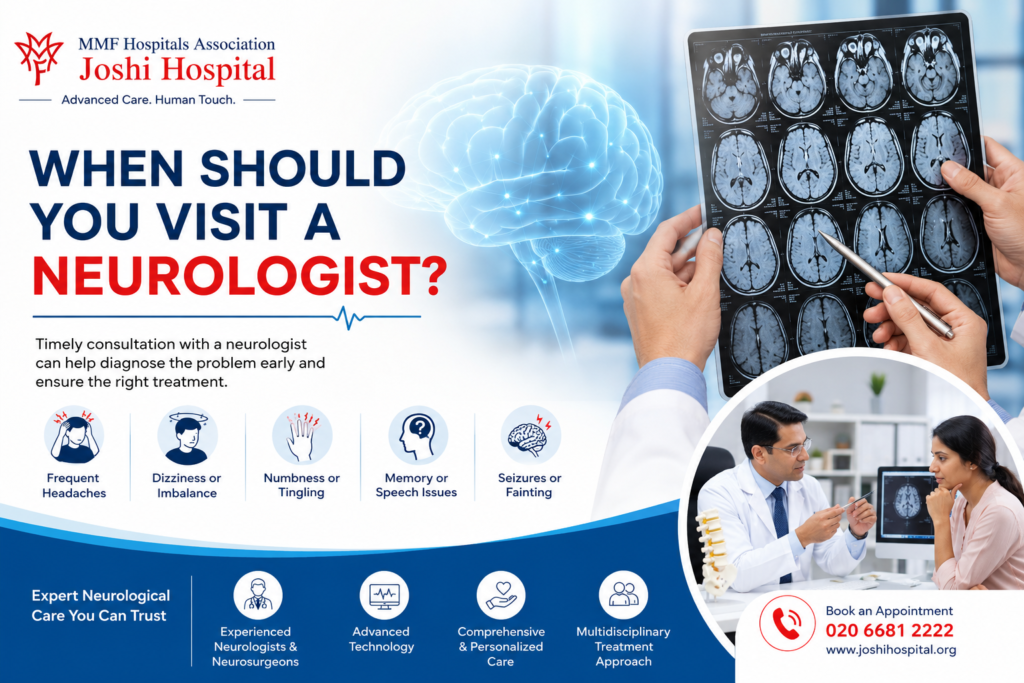
When Should You Visit a Neurologist?

Neurological problems can affect the brain, spine, nerves, and muscles, often interfering with daily life and overall health. Symptoms like frequent headaches, dizziness, numbness, memory issues, or seizures should never be ignored. Seeking timely medical attention from an experienced neurologist in Pune can help diagnose conditions early and improve treatment outcomes. At Joshi Hospital, patients receive comprehensive neurological and neurosurgical care with advanced diagnostic technology and expert specialists. As a trusted neuro specialist hospital in Pune, Joshi Memorial Hospital offers personalized care for a wide range of neurological disorders. Signs You Should Visit a Neurologist in Pune 1. Frequent Headaches Recurring headaches or severe migraines that disrupt daily activities may indicate underlying neurological conditions. A neurologist can identify the cause and recommend effective treatment options. 2. Dizziness or Imbalance Persistent dizziness, vertigo, or balance problems can be linked to disorders affecting the brain, nerves, or inner ear. Early diagnosis is important to prevent complications. 3. Numbness or Tingling Tingling sensations or numbness in the hands, legs, or face may be symptoms of nerve-related conditions such as neuropathy or spinal disorders. 4. Memory or Speech Problems Difficulty remembering things, confusion, speech difficulties, or cognitive decline should be evaluated by a neurologist as they may indicate neurological disorders requiring medical attention. 5. Seizures or Fainting Seizures, sudden blackouts, or unexplained fainting episodes require immediate consultation with a neurologist or neurosurgeon in Pune for accurate diagnosis and treatment. 6. Advanced Neurology Care at Joshi Memorial Hospital Joshi Hospital provides advanced neurological and neurosurgical services under one roof. The hospital’s experienced team of neurologists and neurosurgeons in Pune offers expert diagnosis and treatment for conditions affecting the brain, spine, and nervous system. Services Offered Stroke management and rehabilitation Brain and spine disorder treatment Epilepsy and seizure management Migraine and headache treatment Neurosurgery services Nerve disorder treatment Neuro rehabilitation care Why Choose Joshi Memorial Hospital? Experienced neurologists and neurosurgeons in Pune Advanced diagnostic and surgical technology Comprehensive neuro specialist hospital in Pune Personalized patient care Multidisciplinary treatment approach Early diagnosis and proper treatment can make a significant difference in neurological conditions. If you or your loved ones experience symptoms related to the nervous system, consult the experts at Joshi Memorial Hospital for specialized neurological care. Contact Us – 020-41096666 | 020-25676861 | 020-25672563/64/66

When Should You Visit a Neurologist? Read More »

Neuro & Spine Surgery in Pune

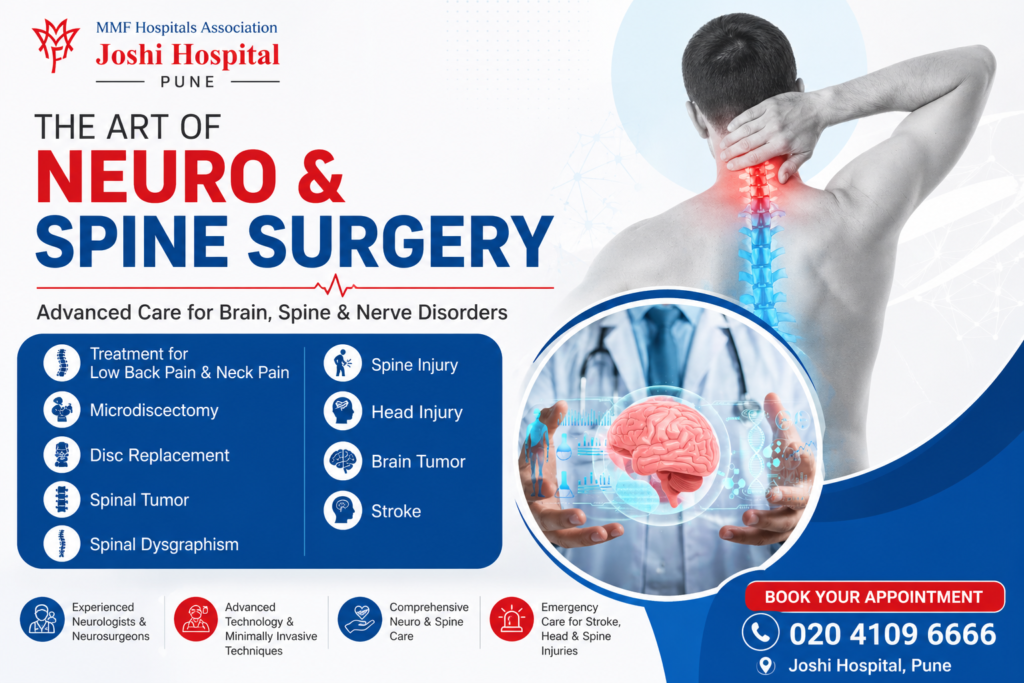
The Art of Neuro & Spine Surgery: Advanced Neurological Care at Joshi Hospital, Pune

Neurological and spine conditions can significantly affect daily life, mobility, and overall well-being. With advancements in medical technology and expert care, modern neuro and spine surgery offers safe and effective treatment options for complex conditions. At Joshi Hospital, patients receive specialized care from experienced neurologists in Pune and skilled neurosurgeons in Pune, ensuring accurate diagnosis and personalized treatment. This blog explores the importance of neuro and spine care, common conditions treated, and advanced surgical procedures available at Joshi Hospital. Understanding Neuro & Spine Surgery Neuro and spine surgery focuses on diagnosing and treating disorders related to the brain, spinal cord, and nervous system. These conditions may arise due to injury, degeneration, tumors, infections, or congenital abnormalities. A qualified neurosurgeon in Pune performs specialized procedures to relieve pain, restore function, and improve quality of life. Meanwhile, an experienced neurologist in Pune evaluates symptoms, manages neurological conditions, and coordinates long-term treatment plans. At Joshi Hospital, the collaboration between neurologists and neurosurgeons ensures comprehensive neurological care under one roof. Common Neurological & Spine Conditions Treated Neuro and spine specialists manage a wide range of conditions affecting the brain and spine. Early diagnosis plays a crucial role in preventing complications and improving outcomes. 1. Low Back Pain and Neck Pain Persistent back or neck pain is one of the most common reasons patients consult a neurologist in Pune. Causes may include herniated discs, nerve compression, muscle strain, or spinal degeneration. Advanced imaging and minimally invasive procedures help relieve pain and restore mobility. 2. Disc Problems and Microdiscectomy A slipped or herniated disc can compress nerves, leading to severe pain, numbness, or weakness. Microdiscectomy is a minimally invasive surgical procedure performed by an experienced neurosurgeon in Pune to remove damaged disc material and reduce nerve pressure. 3. Disc Replacement Surgery In cases of severe disc damage, artificial disc replacement helps restore spinal function and maintain flexibility. This advanced treatment is available at Joshi Hospital, ensuring improved patient outcomes and faster recovery. 4. Spinal Tumors Spinal tumors can affect nerve function and cause significant pain. Early diagnosis and surgical removal by a skilled neurosurgeon in Pune can prevent further complications and preserve neurological function. 5. Spinal Dysraphism This congenital condition affects spinal cord development. Early evaluation and timely intervention at a specialized center like Joshi Hospital can improve long-term outcomes. 6. Spine Injury Spinal injuries due to accidents or trauma require immediate medical attention. Expert neuro and spine care helps stabilize the spine and prevent permanent damage. 7. Head Injury Head injuries can range from mild concussions to severe brain trauma. A dedicated neurological team ensures prompt diagnosis and treatment to minimize complications. 8. Brain Tumors Brain tumors require precise diagnosis and specialized surgical techniques. A highly trained neurosurgeon in Pune uses advanced methods to remove tumors safely while preserving critical brain functions. 9. Stroke Management Stroke is a medical emergency that requires immediate treatment. Experienced neurologists provide rapid assessment and life-saving care, reducing the risk of long-term disability. Advanced Neuro & Spine Procedures Available Modern neuro and spine surgery emphasizes minimally invasive techniques that reduce recovery time and improve outcomes. Microdiscectomy Microdiscectomy is performed using advanced surgical tools to remove herniated disc fragments. It is a preferred procedure for relieving nerve compression and restoring mobility. Disc Replacement Surgery Artificial disc replacement maintains spinal movement and reduces stress on surrounding discs. It is often recommended for patients with severe disc degeneration. Tumor Removal Surgery Advanced imaging and microsurgical techniques enable precise removal of brain and spinal tumors while minimizing risks. Trauma and Injury Management Comprehensive trauma care ensures stabilization of spinal injuries and prevention of long-term complications. At Joshi Hospital, these procedures are performed using state-of-the-art technology and modern surgical protocols. Why Choose Joshi Hospital for Neuro & Spine Care? Selecting the right hospital plays a critical role in successful treatment outcomes. Joshi Hospital is known for delivering high-quality neurological care in Pune. Key Advantages: Experienced neurologists in Pune and skilled neurosurgeons in Pune Advanced diagnostic and surgical technology Comprehensive care for brain and spine disorders Patient-centered treatment plans Minimally invasive surgical options Emergency care for stroke and head injuries Multidisciplinary approach to neurological care Patients benefit from personalized treatment strategies designed to address their specific medical needs. When Should You Consult a Neurologist or Neurosurgeon? Early consultation can prevent complications and improve recovery. You should seek medical advice if you experience: Persistent back or neck pain Numbness or weakness in limbs Frequent headaches Loss of balance or coordination Sudden speech difficulty Seizures Memory problems Severe head injury Symptoms of stroke such as facial drooping or limb weakness Prompt evaluation by a neurologist in Pune can help detect serious conditions at an early stage. The Future of Neuro & Spine Surgery With continuous advancements in technology, neuro and spine surgery is becoming safer and more effective. Innovations such as minimally invasive surgery, advanced imaging, and precision-guided techniques have significantly improved patient outcomes. Hospitals like Joshi Hospital are adopting modern medical practices to deliver world-class neurological care in Pune. Conclusion Neuro and spine disorders require expert diagnosis, advanced treatment, and compassionate care. From managing chronic back pain to performing complex brain and spine surgeries, the role of a skilled neurologist in Pune and experienced neurosurgeon in Pune is crucial. At Joshi Hospital, patients receive comprehensive neuro and spine care supported by advanced technology and expert medical teams. Early diagnosis, timely intervention, and personalized treatment plans help restore mobility, relieve pain, and improve overall quality of life. If you or your loved one is experiencing neurological symptoms or spine-related issues, consulting specialists at Joshi Hospital can make a significant difference in recovery and long-term health.

The Art of Neuro & Spine Surgery: Advanced Neurological Care at Joshi Hospital, Pune Read More »