
Joshi Hospital

Tag: Heart Attack Treatment in Pune

Heart Attack Treatment in Pune

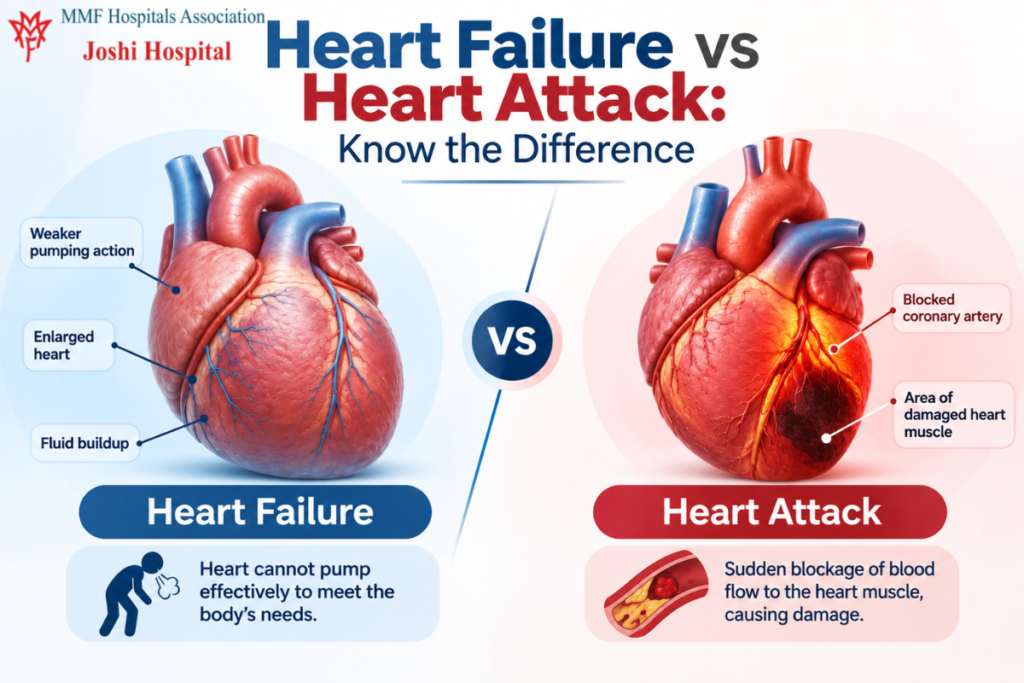
Heart failure vs heart attack difference

Heart Failure vs Heart Attack: Know the Difference

The terms heart attack and heart failure are sometimes used interchangeably in everyday conversation, but medically, they describe two different conditions. A heart attack usually occurs when blood flow to part of the heart muscle is suddenly reduced or blocked. Heart failure, on the other hand, means the heart is unable to pump or fill with blood well enough to meet the body’s needs. There is also an important connection between them: a heart attack can damage the heart muscle and may contribute to heart failure in some patients. Understanding the difference can help people recognize warning signs and know when urgent medical attention may be necessary. At Joshi Hospital, Pune, patient education is an important part of cardiovascular care because recognizing symptoms early can help patients seek appropriate medical evaluation without unnecessary delay. What Is a Heart Attack? A heart attack, medically known as a myocardial infarction, occurs when a portion of the heart muscle does not receive enough blood. A common underlying reason is coronary artery disease, in which fatty deposits called plaque build up inside the coronary arteries. If a plaque ruptures and a blood clot forms, blood flow through the artery can become severely restricted or completely blocked. Without adequate blood and oxygen, heart muscle can become damaged. The longer significant blood-flow interruption continues, the greater the potential for heart-muscle injury. This is why a suspected heart attack should be treated as a medical emergency. Common Warning Signs of a Heart Attack Heart attack symptoms are not identical in every person. Some heart attacks begin suddenly with severe symptoms, while others may begin more gradually. Possible warning signs include: Pressure, squeezing, heaviness, fullness or discomfort in the chest Pain or discomfort spreading to one or both arms Discomfort in the shoulder, back, neck or jaw Shortness of breath Cold sweating Nausea or vomiting Light-headedness or faintness Unusual weakness or fatigue Women may sometimes report additional symptoms such as unusual tiredness, nausea, upper-back discomfort or shortness of breath, although chest discomfort remains an important heart-attack symptom. Do not try to diagnose a suspected heart attack at home. New or concerning symptoms require prompt medical assessment. What Is Heart Failure? Despite its name, heart failure does not mean that the heart has completely stopped working. It means the heart is not pumping enough blood for the body’s needs or is having difficulty filling properly. Heart failure can develop gradually over months or years, although it can sometimes worsen suddenly. When the heart cannot circulate blood efficiently, people may experience fatigue and breathlessness. Fluid may also accumulate in the lungs, legs, ankles or other parts of the body. Common Symptoms of Heart Failure Symptoms depend on the type and severity of heart failure. Common symptoms can include: Shortness of breath during activity Breathlessness while resting or lying flat Persistent tiredness or weakness Reduced ability to exercise or perform routine activities Swelling of the feet, ankles or legs Persistent cough or wheezing Rapid or irregular heartbeat Fluid-related weight gain Reduced appetite or nausea Difficulty sleeping because of breathlessness A person who previously climbed stairs comfortably but gradually starts becoming unusually breathless or tired may need cardiovascular evaluation. Similarly, increasing ankle swelling or difficulty breathing while lying flat should not simply be attributed to ageing without appropriate medical assessment. Heart Attack vs Heart Failure: The Main Difference The simplest way to understand the distinction is: Heart Attack = A blood-flow problem affecting the heart muscle Heart Failure = A problem with the heart’s ability to pump or fill effectively A heart attack is generally an acute event requiring urgent treatment. Heart failure is often a long-term clinical condition, although sudden deterioration can occur and may also require emergency care. Can a Heart Attack Cause Heart Failure? Yes, it can. When a heart attack damages a significant portion of heart muscle, the affected heart may become less effective at pumping blood. Over time, this damage can contribute to the development of heart failure. However, not everyone who experiences a heart attack develops heart failure, and heart attacks are not the only cause of heart failure. What Else Can Cause Heart Failure? Heart failure can develop because of several underlying cardiovascular conditions. These may include: Coronary artery disease Previous heart attack Long-standing high blood pressure Heart muscle disease or cardiomyopathy Heart valve disorders Certain abnormal heart rhythms Some congenital heart conditions Other medical conditions that damage or place excessive strain on the heart Identifying the underlying cause is important because heart failure treatment is not identical for every patient. How Are Heart Attack and Heart Failure Diagnosed? Because symptoms can overlap with other medical conditions, diagnosis should be based on medical assessment rather than symptoms alone. Evaluating a Suspected Heart Attack Depending on the clinical situation, doctors may use: Electrocardiogram (ECG): Records the heart’s electrical activity and may identify changes associated with a heart attack. Blood Tests: Cardiac troponin testing can help identify injury to heart muscle. Echocardiography: May be used to evaluate heart function and how different areas of the heart are moving. Coronary Angiography: In appropriate cases, angiography can identify significant narrowing or blockage in coronary arteries and help guide treatment. Evaluating Suspected Heart Failure Evaluation may include: Medical History and Examination: Symptoms, previous heart conditions and risk factors are reviewed. Echocardiography: An important test used to assess the structure and function of the heart. Blood Tests: Tests may include BNP or NT-proBNP in appropriate clinical situations, as well as assessment of kidney function and other relevant parameters. ECG and Chest Imaging: These may provide additional information depending on symptoms and clinical findings. Not every patient requires every test. Investigations are selected according to the individual’s presentation. Is Ejection Fraction Important in Heart Failure? Yes, but it is only one part of the assessment. Ejection fraction (EF) measures the proportion of blood pumped out of the heart’s main pumping chamber during each contraction. Some patients have heart failure with a reduced ejection fraction, while others can have symptoms of heart

Heart Failure vs Heart Attack: Know the Difference Read More »
Young adult discussing heart health and heart attack risk factors with a doctor at Joshi Hospital, Pune

Why Are Heart Attacks Increasing in Younger Adults?

Heart attacks are often thought of as a health concern affecting older people. However, there is growing concern about cardiovascular events occurring in younger adults. Recent research and public-health discussions have highlighted the importance of identifying heart disease risk factors earlier in life and taking preventive steps before serious problems develop. At Joshi Hospital, Pune, we believe that awareness, early risk assessment and timely medical attention can play an important role in protecting Heart Health. A heart attack can occur when blood flow to part of the heart muscle becomes severely reduced or blocked, and the underlying causes and risk factors can vary from person to person. Why Is Heart Disease Becoming a Concern at a Younger Age? There is no single reason behind heart attacks in younger adults. Instead, several lifestyle, metabolic, genetic and environmental factors may contribute to cardiovascular risk. Some young adults may already have conditions such as High Blood Pressure, High Cholesterol, diabetes or obesity without knowing it. The American Heart Association has also highlighted that many people may enter adulthood with cardiovascular risk factors already present, making prevention and early attention especially important. 1. Sedentary Lifestyle and Lack of Physical Activity Modern routines often involve long hours of sitting, screen-based work and limited physical activity. Over time, physical inactivity can contribute to other risk factors, including excess weight, unhealthy cholesterol levels, high blood pressure and problems with blood sugar regulation. Regular movement and an active lifestyle are important parts of maintaining Heart Health at every age. 2. Unhealthy Eating Habits Frequent consumption of highly processed foods, foods high in saturated fat, excess sodium and added sugars may contribute to cardiovascular risk over time. An unhealthy eating pattern can be associated with obesity, high cholesterol and other conditions that affect the heart and blood vessels. Making healthier food choices does not necessarily mean following extreme diets. A balanced approach that includes appropriate portions of vegetables, fruits, whole grains and other nutritious foods can support overall health. 3. Stress and Poor Sleep Busy work schedules, irregular routines and ongoing stress can affect healthy lifestyle habits. Long or irregular working hours, inadequate sleep and prolonged stress are among factors that may influence cardiovascular health. Stress may also indirectly increase risk when it contributes to unhealthy eating, smoking or reduced physical activity. Prioritising adequate sleep, relaxation and regular physical activity can be meaningful components of a Healthy Lifestyle. 4. Smoking and Tobacco Use Smoking is a well-established risk factor for heart disease and heart attack. Tobacco exposure can damage blood vessels and contribute to processes that increase cardiovascular risk. Avoiding smoking and seeking professional support to quit can be an important step towards better Cardiac Health. 5. Rising Rates of Metabolic Risk Factors Conditions such as Diabetes, high blood pressure, high cholesterol, overweight and obesity can develop earlier in life. These factors may not always cause obvious symptoms, which is why regular health check-ups can be valuable, particularly for people with multiple risk factors. At Joshi Hospital, Pune, appropriate medical evaluation can help individuals understand their personal health risks and discuss suitable preventive steps with a qualified healthcare professional. 6. Family History and Genetics Lifestyle is important, but it is not the only factor. A family history of early heart disease can increase an individual’s risk. Genetic factors may also contribute to the development of coronary heart disease. If close family members have experienced heart disease at a relatively young age, discussing this history during a Heart Check-up may help your doctor assess your overall cardiovascular risk. 7. Ignoring Early Warning Signs Young adults may sometimes assume that chest discomfort, breathlessness, unusual fatigue or other symptoms cannot be related to the heart because of their age. However, heart attack symptoms can vary and may be mild, gradual or different from one person to another. Possible symptoms can include chest discomfort, pain spreading to the arm, back, neck or jaw, shortness of breath, sweating, nausea, dizziness or unusual tiredness. Women may sometimes experience symptoms differently, including nausea, unusual fatigue, dizziness or pressure or tightness in the chest. Can Younger Adults Reduce Their Risk of Heart Disease? Although some risk factors, such as age and family history, cannot be changed, many important risk factors can be addressed. Positive steps may include: Staying physically active regularly Choosing a balanced and heart-conscious diet Maintaining a healthy weight Avoiding smoking and tobacco Managing Blood Pressure, blood sugar and cholesterol Getting adequate quality sleep Managing stress in healthy ways Scheduling appropriate Preventive Health Check-ups Discussing a family history of early heart disease with a healthcare professional These measures cannot guarantee that a heart attack will never occur, but managing modifiable risk factors can help support better cardiovascular health. When Should You Seek Medical Attention? Do not ignore potentially serious symptoms such as persistent or severe chest discomfort, unexplained shortness of breath, pain or discomfort spreading to the arm, shoulder, back, neck or jaw, sudden sweating, dizziness or other concerning symptoms. Heart attack symptoms can differ between individuals. Prompt medical assessment is important when a heart attack is suspected. In Joshi Hospital, our Heart Specialist in Pune encourages individuals of all ages to take changes in their health seriously and seek appropriate professional medical care rather than relying on self-diagnosis. Take Your Heart Health Seriously—At Every Age Being young does not automatically mean being free from cardiovascular risk. Today’s lifestyle patterns, combined with conditions such as high blood pressure, diabetes, high cholesterol, obesity, smoking and family history, can influence heart health over time. Recent research has reinforced concerns about cardiovascular events and heart attack outcomes in younger adults, highlighting the value of prevention and earlier risk assessment. A proactive approach to Heart Health, healthy daily habits and timely Cardiac Evaluation may help identify risk factors earlier. If you have concerns about your heart health or have multiple risk factors, consult a qualified healthcare professional for personalised advice and appropriate evaluation. Medical Disclaimer: This article is for general awareness only and does not replace professional medical

Why Are Heart Attacks Increasing in Younger Adults? Read More »