
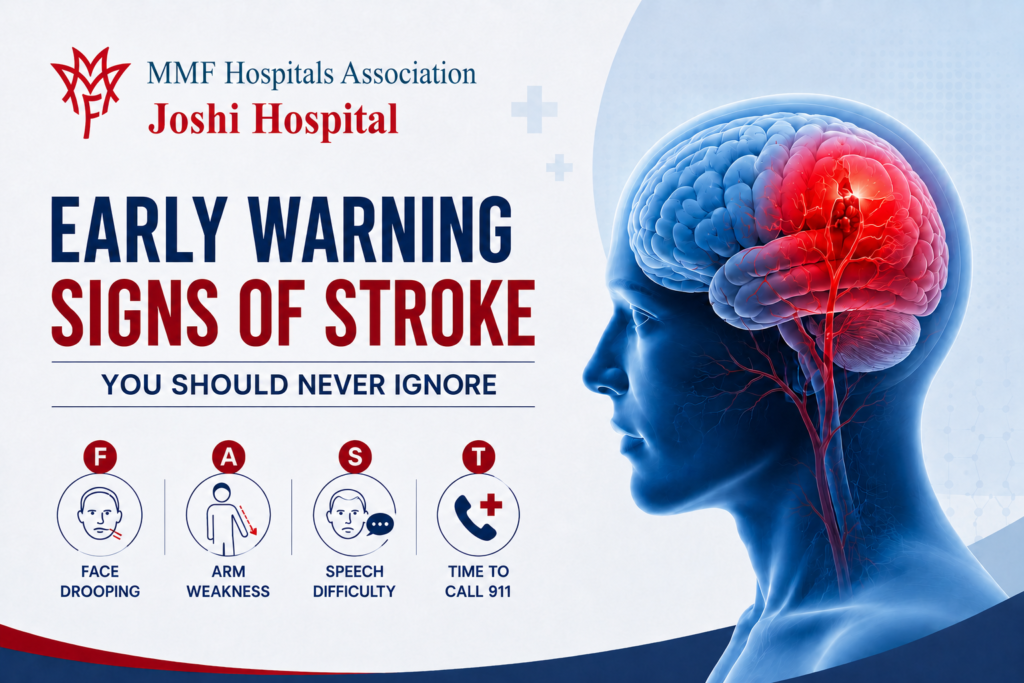
A stroke is a medical emergency that can happen when blood flow to part of the brain is blocked or when a blood vessel in the brain bursts. Because brain cells can be damaged within minutes, recognizing the early warning signs of stroke and seeking emergency medical care quickly is extremely important.
At Joshi Hospital, Neuro Specialist Hospital in Pune, patients can access specialist neurological evaluation and medical care for stroke-related conditions. If you or someone around you develops sudden neurological symptoms, do not wait for them to improve on their own. Seek emergency medical attention immediately.
What Is a Stroke?
A stroke occurs when part of the brain does not receive enough blood and oxygen or when bleeding occurs inside or around the brain. The two main types are:
- Ischemic stroke: Caused by a blockage in a blood vessel supplying the brain.
- Hemorrhagic stroke: Caused by bleeding from a ruptured blood vessel in or around the brain.
Both types require urgent medical assessment and treatment.
Early Warning Signs of Stroke
Stroke symptoms often appear suddenly. Knowing the warning signs can help you act quickly.
1. Sudden Weakness or Numbness
Sudden weakness, numbness or loss of sensation in the face, arm or leg, particularly on one side of the body, can be an important warning sign of stroke.
For example, a person may suddenly find it difficult to lift one arm or may notice that one side of the face feels weak.
2. Sudden Difficulty Speaking
A person experiencing a stroke may suddenly have:
- Slurred speech
- Difficulty finding the right words
- Trouble understanding what others are saying
- Difficulty communicating clearly
Sudden speech problems should never be ignored.
3. Facial Drooping
Ask the person to smile. If one side of the face appears to droop or the smile becomes uneven, it may indicate a neurological emergency.
4. Sudden Vision Problems
Stroke can affect the areas of the brain responsible for vision. Sudden blurred or double vision, loss of vision in one or both eyes, or other sudden visual disturbances require immediate medical evaluation.
5. Sudden Severe Headache
A sudden, severe headache that is unusual for the person, particularly when accompanied by vomiting, confusion, loss of consciousness or neurological symptoms, can be a warning sign of a serious condition, including hemorrhagic stroke.
6. Sudden Dizziness or Loss of Balance
Unexpected dizziness, difficulty walking, loss of coordination or problems maintaining balance can sometimes occur during a stroke, particularly when certain areas of the brain are affected.
7. Sudden Confusion
Sudden confusion, difficulty understanding simple instructions, unusual behavior or problems with memory can be signs that the brain is not functioning normally.
Remember FAST
One of the simplest ways to remember common stroke warning signs is FAST:
F – Face: Does one side of the face droop?
A – Arms: Is one arm weak or numb?
S – Speech: Is speech slurred or difficult to understand?
T – Time: Time is critical. Seek emergency medical help immediately.
If any of these symptoms appear suddenly, do not wait to see whether they disappear.
Why Immediate Stroke Treatment Matters
Stroke can cause permanent brain injury and may result in problems with movement, speech, memory, vision and daily activities. Early medical assessment helps doctors determine the type of stroke and identify the appropriate treatment.
Treatment depends on several factors, including:
- Type of stroke
- Location and extent of brain involvement
- Time since symptoms began
- Overall health
- Other medical conditions and medications
Some treatments are time-sensitive, which is why reaching an appropriate emergency medical facility as soon as possible is crucial.
Can Stroke Symptoms Go Away on Their Own?
Sometimes stroke-like symptoms may disappear after a short period. This can occur with a transient ischemic attack (TIA), often called a mini-stroke.
Even when symptoms disappear, a TIA should not be ignored. It can be a warning that a major stroke may occur in the future. Prompt medical evaluation is important to identify possible causes and reduce future risk.
Who May Be at Higher Risk of Stroke?
Stroke can affect anyone, but certain factors can increase the risk, including:
- High blood pressure
- Diabetes
- High cholesterol
- Smoking or tobacco use
- Obesity
- Heart conditions such as atrial fibrillation
- Previous stroke or TIA
- Increasing age
- Physical inactivity
- Certain family and medical histories
Managing these risk factors through appropriate medical care and lifestyle changes can help reduce stroke risk.
What Should You Do If You Notice Stroke Symptoms?
If you notice sudden facial weakness, arm weakness, speech difficulty, vision problems, severe unexplained headache, dizziness or confusion:
- Treat the symptoms as an emergency.
- Seek emergency medical care immediately.
- Note the approximate time the symptoms started or the last time the person was known to be well.
- Do not wait for the symptoms to disappear.
- Avoid delaying medical care by trying home remedies.
Neurological Care at Joshi Hospital
Joshi Hospital, Neurology Hospital in Pune, provides medical care across multiple specialties, including neurological evaluation and treatment. If you are looking for a neurologist in Pune for neurological symptoms, headaches, dizziness, seizures, stroke-related concerns or other nervous system conditions, timely consultation can help with appropriate diagnosis and management.
For sudden symptoms suggestive of stroke, however, emergency medical attention should take priority over arranging a routine outpatient appointment.
Conclusion
Recognizing the early warning signs of stroke can make a critical difference. Sudden facial drooping, weakness or numbness, speech difficulties, vision changes, severe headache, dizziness, loss of balance or confusion should never be ignored.
If you suspect a stroke, seek emergency medical care immediately. Early assessment and treatment can help reduce the risk of serious complications and long-term disability.
Medical Disclaimer: This article is intended for general health education and should not replace professional medical advice. Stroke symptoms require urgent medical evaluation.