
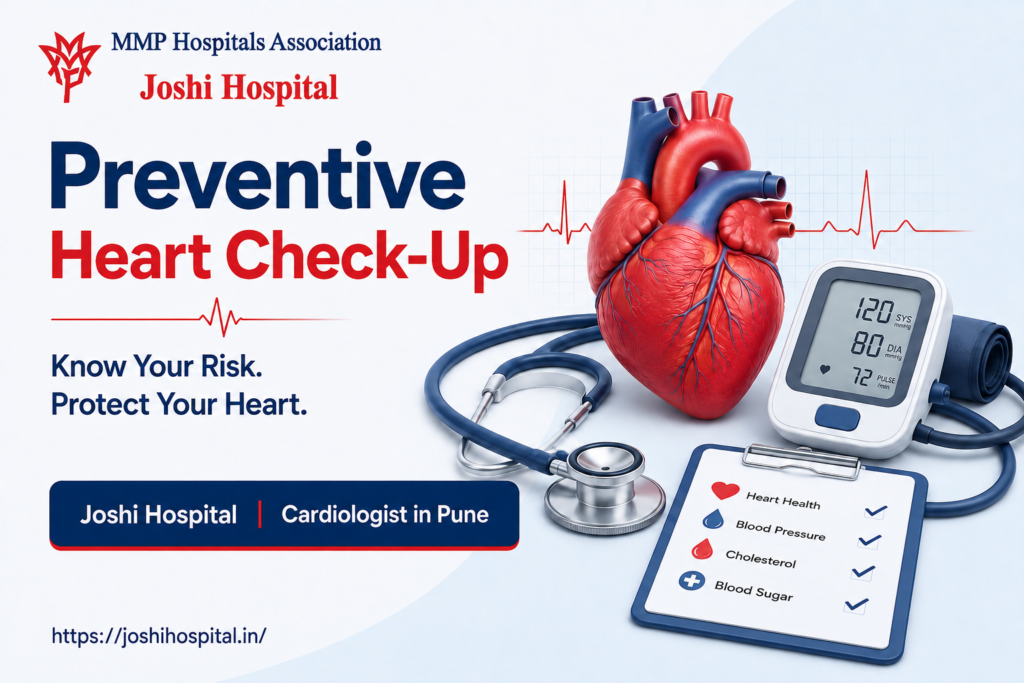
Consult a Cardiologist in Pune to Understand Your Heart Health Before Symptoms Appear
Most people consider visiting a cardiologist only when they experience chest pain, breathlessness or an unusual heartbeat. However, several risk factors for heart disease can develop quietly for years without producing noticeable symptoms. High blood pressure, elevated cholesterol and diabetes may gradually affect the heart and blood vessels long before a person feels unwell.
A preventive heart check-up helps identify these hidden risks at an early stage. It gives your doctor an opportunity to assess your overall cardiovascular health and recommend timely lifestyle changes, further testing or treatment when required.
Consulting a Cardiologist in Pune for a risk-based evaluation can be especially valuable if you have diabetes, high blood pressure, obesity, a sedentary lifestyle or a family history of heart disease.
What Is a Preventive Heart Check-Up?
A preventive heart check-up is a structured medical assessment that evaluates your likelihood of developing heart disease. It does not necessarily mean undergoing every available cardiac test.
The evaluation is personalised according to factors such as:
- Your age and biological sex
- Current symptoms, if any
- Blood pressure and cholesterol levels
- Blood glucose levels
- Body weight and waist measurement
- Smoking or tobacco use
- Physical activity and dietary habits
- Family history of premature heart disease
- Existing medical conditions and medicines
The purpose is not simply to receive a report marked “normal.” A meaningful check-up helps you understand your current risk and what you can do to protect your heart over the coming years.
Why Is a Heart Check-Up Important Without Symptoms?
Heart disease does not always provide an early warning. High blood pressure often causes no symptoms, while unhealthy cholesterol levels can remain unnoticed unless they are measured through a blood test.
According to the American Heart Association, monitoring blood pressure, cholesterol, blood glucose, weight, diet, physical activity and tobacco use is an important part of assessing cardiovascular risk.
A preventive check-up can help:
- Identify high blood pressure, diabetes or abnormal cholesterol
- Estimate the likelihood of future cardiovascular problems
- Detect lifestyle factors that may be affecting heart health
- Review whether existing medicines are working appropriately
- Decide if additional cardiac investigations are genuinely necessary
- Create a practical prevention plan based on individual risk
Early identification gives people time to make meaningful changes before a complication such as a heart attack or stroke occurs.
Who Should Consult a Cardiologist in Pune for Preventive Screening?
Every adult can benefit from knowing basic health numbers such as blood pressure, cholesterol and blood glucose. A more detailed cardiovascular assessment may be appropriate if you have one or more risk factors.
You may require earlier or more frequent screening if you:
- Have diabetes, hypertension or high cholesterol
- Are overweight or have excess abdominal fat
- Use tobacco in any form
- Have a sedentary routine
- Experience persistent stress or inadequate sleep
- Have kidney disease or another long-term medical condition
- Have a parent or sibling who developed heart disease at a relatively young age
- Previously had a heart attack, stroke, angioplasty or cardiac surgery
- Are restarting exercise after a long period of inactivity
- Notice chest discomfort, unexplained breathlessness, dizziness or palpitations
People with known heart disease need regular follow-up rather than a general preventive package. The timing and type of tests should be decided by their treating cardiologist.
What Does a Preventive Heart Check-Up Usually Include?
The exact components differ for each person. A typical assessment may begin with medical history, physical examination and basic measurements.
Blood pressure measurement
High blood pressure places additional strain on the arteries and heart. Because it may not cause symptoms, regular measurement is essential. A single elevated reading does not always confirm hypertension. Your doctor may repeat the measurement or recommend home blood pressure monitoring.
Cholesterol profile
A lipid profile generally measures total cholesterol, LDL cholesterol, HDL cholesterol and triglycerides. These results are interpreted alongside age, blood pressure, diabetes status, tobacco use and family history.
An abnormal value should not be assessed in isolation. A Cardiologist in Pune can evaluate the complete risk profile before recommending lifestyle measures or medication.
Blood glucose testing
Fasting blood glucose and HbA1c may be advised to screen for prediabetes or diabetes. Uncontrolled diabetes can damage blood vessels and significantly increase the likelihood of cardiovascular disease.
Weight and waist assessment
Body mass index and waist circumference help assess weight-related risk. Excess fat around the abdomen is associated with insulin resistance and metabolic health concerns that may affect the heart.
Electrocardiogram
An electrocardiogram, commonly called an ECG, records the electrical activity of the heart. It may identify certain rhythm abnormalities or other changes. However, a normal ECG does not rule out every form of heart disease.
Does Everyone Need an Echo, Stress Test or CT Scan?
No. Advanced tests should not be treated as routine additions for every healthy person.
Depending on symptoms and clinical risk, a cardiologist may recommend:
- Echocardiography to examine heart structure and pumping function
- A stress test to assess the heart during physical exertion
- Holter monitoring to record heart rhythm over an extended period
- CT coronary calcium scoring in selected individuals
- Other imaging or blood tests when clinically indicated
Unnecessary testing may produce unclear findings and lead to additional procedures that do not improve health outcomes. This is why the check-up should ideally be guided by a qualified doctor rather than selected only as a fixed test package.
How Often Should You Have a Preventive Heart Check-Up?
There is no single schedule suitable for everyone. The frequency depends on your age, previous results and cardiovascular risk.
The American Heart Association advises that adults with normal blood pressure should generally have it checked at least once a year. Cholesterol testing may be performed every few years in adults at average risk, while people with abnormal results or additional risk factors need more frequent monitoring.
Your cardiologist may suggest shorter follow-up intervals if you have:
- Hypertension, diabetes or abnormal cholesterol
- A strong family history of cardiovascular disease
- Changes in weight, symptoms or lifestyle
- Recently started heart-related medication
- Previous cardiovascular disease
Regular follow-up also allows the doctor to assess whether recommended changes are producing measurable improvement.
Preparing for Your Heart Check-Up
Bring previous medical reports, recent blood test results and a list of all medicines and supplements you take. Tell the doctor about symptoms even if they seem minor or occur only occasionally.
You should also be ready to discuss:
- Family history of heart attacks, stroke or sudden cardiac death
- Tobacco and alcohol use
- Typical diet and physical activity
- Sleep quality and stress levels
- Any discomfort experienced during walking or exercise
Do not stop prescribed medicines before the check-up unless your doctor specifically advises you to do so. If fasting is needed for a particular blood test, confirm the instructions while booking the appointment.
Prevention Continues After the Check-Up
A preventive heart check-up is valuable only when the results lead to appropriate action. Depending on your risk profile, your doctor may recommend improvements in diet, physical activity, sleep, stress management and tobacco cessation.
The World Health Organization identifies tobacco use, an unhealthy diet, physical inactivity and harmful alcohol use among the important behavioural risk factors for cardiovascular disease.
Sustainable changes are generally more helpful than extreme short-term plans. The right approach should be realistic, medically appropriate and suitable for your existing health conditions.
Preventive Cardiac Care at Joshi Hospital
Joshi Hospital provides preventive health packages and cardiac evaluation services for individuals with different health needs. Its cardiac care services include heart health check-ups along with assessment and management of risk factors such as blood pressure and cholesterol.
If you have a family history of heart disease, existing risk factors or concerns about your cardiovascular health, consulting a Cardiologist in Pune at Joshi Hospital can help you receive an individualised assessment. The cardiologist can review your history, recommend relevant tests and guide you towards practical steps for protecting your long-term heart health.
Frequently Asked Questions
1. At what age should preventive heart check-ups begin?
Basic screening for blood pressure, weight, cholesterol and blood glucose should begin in adulthood. People with diabetes, obesity, tobacco use or a family history of early heart disease may need screening sooner and more frequently. A doctor can determine an appropriate schedule based on personal risk.
2. Can a normal ECG confirm that my heart is completely healthy?
No. An ECG provides useful information about the heart’s electrical activity, but it cannot rule out every cardiac condition. Results must be interpreted with symptoms, medical history, examination findings and other tests when indicated.
3. Should I undergo a full heart check-up before starting exercise?
Healthy individuals beginning moderate activity may not always need extensive cardiac testing. However, people with symptoms, known medical conditions, multiple risk factors or a long period of inactivity should consult a doctor before starting strenuous exercise.
Medical disclaimer: This blog is intended for general educational purposes and does not replace medical consultation, diagnosis or treatment. Seek prompt medical attention for chest pain, severe breathlessness, fainting, sudden sweating or other concerning symptoms.
#preventiveheartcheckup #cardiologistinpune #hearthealth #cardiaccare #heartdiseaseprevention #healthcheckup #joshiHospital #punehealthcare