
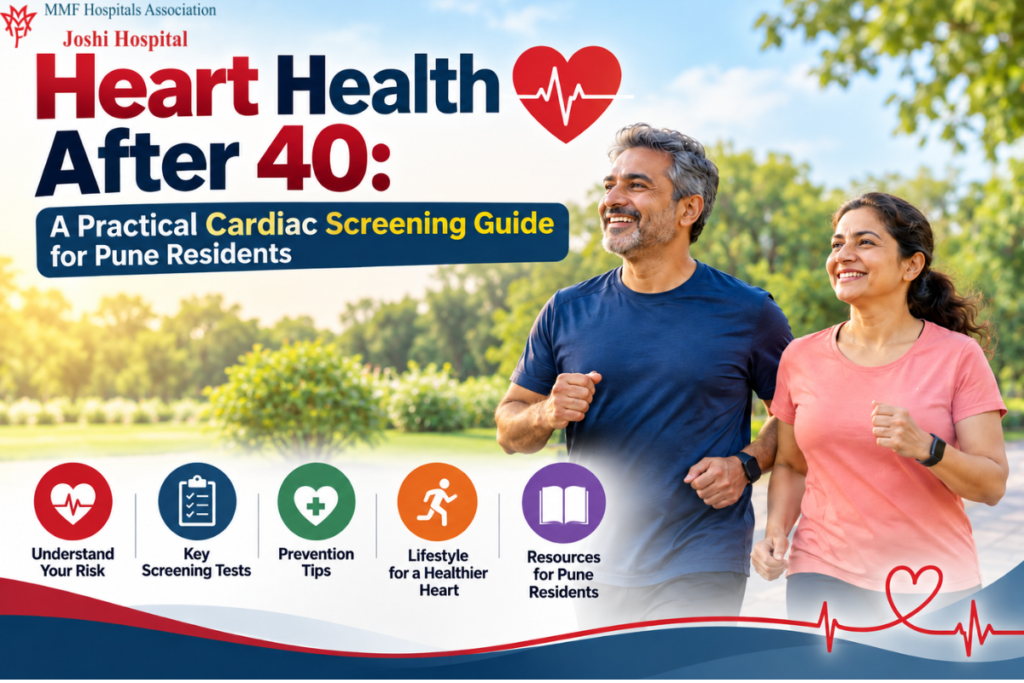
Heart health becomes increasingly important as we enter our 40s. While many people associate heart disease with older age, conditions such as high blood pressure, high cholesterol, and diabetes can begin affecting cardiovascular health much earlier, often without noticeable symptoms.
For people living in Pune, busy work schedules, prolonged sitting, stress, irregular meals, and limited physical activity can make maintaining a healthy lifestyle challenging. However, understanding your risk factors and undergoing appropriate cardiac screening can help identify potential problems before serious complications develop.
At Joshi Hospital, Maharashtra Medical Foundation, we believe that awareness, preventive healthcare, and timely medical guidance play an important role in maintaining long-term heart health.
This guide explains which heart health tests may be useful after 40, who needs screening, and how everyday lifestyle changes can support a healthier heart.
Why Is Heart Health Screening Important After 40?
As we age, our risk of cardiovascular conditions generally increases. Blood vessels may become less flexible, and factors such as cholesterol levels, blood pressure, blood sugar, family history, and lifestyle habits can influence heart health.
Some cardiovascular risk factors develop silently. For example, high blood pressure and elevated cholesterol may not cause obvious symptoms until complications occur.
Regular preventive assessments can help with:
-
Identifying high blood pressure, diabetes, and abnormal cholesterol levels.
-
Estimating the risk of heart attack and stroke.
-
Detecting lifestyle-related risk factors.
-
Planning appropriate treatment and follow-up.
-
Encouraging healthier long-term habits.
Important: Turning 40 does not automatically mean everyone needs an ECG, echocardiogram, or stress test. Screening should be selected according to individual symptoms, medical history, and cardiovascular risk.
7 Important Heart Health Checks to Consider After 40
1. Blood Pressure Monitoring
High blood pressure is a major risk factor for heart disease and stroke. It often develops without symptoms, making regular measurement essential.
Adults should have their blood pressure checked periodically. Those with hypertension, diabetes, kidney disease, or other risk factors may need more frequent monitoring.
2. Lipid Profile Test
A lipid profile measures cholesterol and triglyceride levels, including LDL and HDL cholesterol.
Elevated LDL cholesterol can contribute to plaque buildup in the arteries, increasing cardiovascular risk over time.
Your doctor can recommend how frequently to repeat the test based on previous results and overall risk.
3. Blood Sugar and HbA1c Testing
Diabetes increases the risk of cardiovascular disease. Blood glucose and HbA1c tests can help identify diabetes or prediabetes.
Screening is particularly relevant for people who are overweight, have a family history of diabetes, or have other metabolic risk factors.
4. Body Mass Index and Waist Measurement
Excess body weight, especially abdominal fat, can be associated with high blood pressure, insulin resistance, and unhealthy cholesterol levels.
BMI and waist circumference help assess weight-related health risks, although they should be interpreted alongside other clinical findings.
5. Electrocardiogram (ECG)
An ECG records the electrical activity of the heart. It can help assess certain rhythm abnormalities and other cardiac concerns.
However, a routine ECG is not necessary for every symptom-free adult. A cardiologist may recommend it when symptoms or clinical findings justify testing.
6. Echocardiography (2D Echo)
An echocardiogram uses ultrasound to assess the heart’s structure, pumping function, and valves.
It may be advised when a patient has breathlessness, a heart murmur, suspected heart failure, or other specific indications.
7. Cardiac Stress Testing
A stress test evaluates how the heart responds to physical exertion or medication.
It may be recommended for selected patients with symptoms or suspected coronary artery disease. It is not generally advised as routine screening for all healthy adults over 40.
Who Should Pay Special Attention to Heart Screening?
Certain individuals may benefit from earlier or more frequent cardiovascular risk assessments.
These include people with:
-
A family history of premature heart disease.
-
High blood pressure or diabetes.
-
High LDL cholesterol.
-
Tobacco use or exposure.
-
Excess abdominal weight.
-
Chronic kidney disease.
-
Limited physical activity.
-
A previous cardiovascular condition.
A cardiologist can evaluate these factors together rather than relying on any single test result.
Warning Signs That Should Never Be Ignored
Some heart-related symptoms require prompt medical attention, regardless of age.
Watch for chest pressure or discomfort, unusual shortness of breath, fainting, unexplained sweating, or discomfort spreading to the arm, back, neck, or jaw.
Women, older adults, and people with diabetes may sometimes experience less typical symptoms.
Seek emergency medical care immediately if you experience symptoms suggesting a heart attack. Do not wait for a routine screening appointment or attempt to diagnose the symptoms yourself.
Simple Lifestyle Changes for Better Heart Health After 40
Cardiac screening is only one part of prevention. Everyday habits can also make a meaningful difference.
Stay Physically Active
Aim for at least 150 minutes of moderate-intensity aerobic activity each week, if medically appropriate. Brisk walking, cycling, swimming, and other enjoyable activities can support cardiovascular fitness.
Choose Heart-Friendly Foods
Include vegetables, fruits, whole grains, pulses, nuts, and other fibre-rich foods in your diet. Limit excessive salt, trans fats, and highly processed foods.
Maintain Healthy Sleep Habits
Most adults benefit from approximately seven to nine hours of sleep each night. Consistent sleep patterns can support overall health.
Avoid Tobacco
Smoking and other forms of tobacco use increase cardiovascular risk. Quitting tobacco is one of the most important steps toward better heart health.
Manage Stress
Relaxation techniques, regular exercise, sufficient rest, and supportive social connections may help manage stress. Persistent stress or anxiety may require professional support.
Cardiac Screening in Pune: When Should You Visit a Cardiologist?
If you are over 40 and have multiple cardiovascular risk factors, a family history of premature heart disease, or concerning symptoms, consider discussing your heart health with a qualified healthcare professional.
A consultation may include a review of your medical history, blood pressure, lifestyle, family history, previous test results, and current symptoms.
At Joshi Hospital, Maharashtra Medical Foundation, patients seeking heart health guidance in Pune can discuss their concerns and the need for appropriate cardiac evaluation.
For more information, visit Joshi Hospital.
Frequently Asked Questions About Heart Health After 40
1. What heart tests should I get after turning 40?
Blood pressure assessment, cholesterol testing, and blood sugar evaluation are common components of cardiovascular risk assessment. Additional tests depend on your symptoms and risk factors.
2. How often should I get a heart check-up after 40?
There is no single schedule suitable for everyone. Your doctor can recommend screening intervals based on your age, health conditions, risk factors, and previous results.
3. Can I have heart disease even if I feel healthy?
Yes. High blood pressure, high cholesterol, and early cardiovascular disease may develop without noticeable symptoms. Preventive risk assessment can help identify concerns.
4. Is an ECG enough to confirm that my heart is healthy?
No. An ECG provides information about the heart’s electrical activity but cannot rule out every cardiovascular condition or coronary artery blockage.
5. Do women need cardiac screening after 40?
Yes. Women also develop cardiovascular disease, and their risk assessment should consider blood pressure, cholesterol, diabetes, family history, pregnancy-related complications, and other relevant factors.
6. Where can I seek cardiac screening guidance in Pune?
People living in Pune can consult qualified healthcare professionals, including those at Joshi Hospital, Maharashtra Medical Foundation, to discuss cardiovascular risk assessment and suitable tests.
Conclusion
Heart health after 40 is about understanding your risks, not simply undergoing more tests. Monitoring blood pressure, cholesterol, and blood sugar, maintaining healthy habits, and seeking medical guidance when necessary can help reduce the risk of cardiovascular complications.
If you are concerned about your heart health or have a family history of cardiovascular disease, consider arranging a preventive consultation.
Visit Joshi Hospital, Maharashtra Medical Foundation, Pune, to learn more about appropriate cardiac evaluation and preventive healthcare.
Website: https://joshihospital.in/
Medical disclaimer: This article is for general health education and does not replace professional medical advice, diagnosis, or treatment. Screening and treatment recommendations should be personalised by a qualified healthcare professional.