
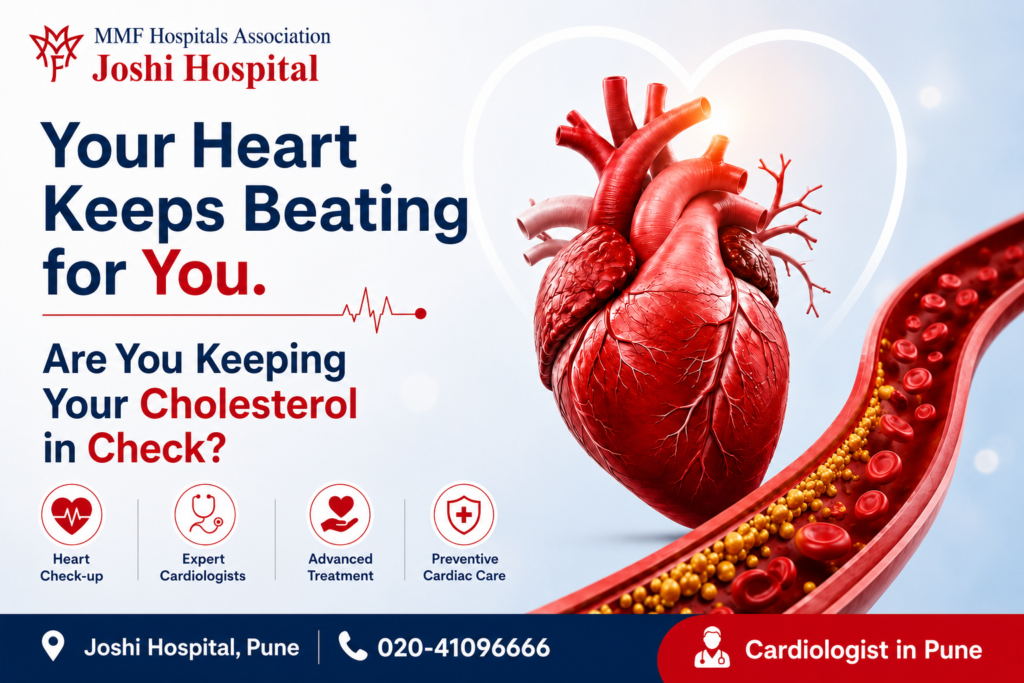
Heart health starts with healthy cholesterol levels. High cholesterol is one of the leading risk factors for heart disease, yet it often has no warning signs. Many people discover they have high cholesterol only after experiencing chest pain, a heart attack, or undergoing routine health screening. At Joshi Hospital, our experienced cardiologists in Pune help patients detect, manage, and prevent cholesterol-related heart problems through advanced diagnostics and personalized cardiac care.
If you have a family history of heart disease, diabetes, high blood pressure, obesity, or a sedentary lifestyle, regular cholesterol screening can help protect your heart and reduce the risk of serious cardiovascular complications. Lifestyle changes combined with timely medical treatment can significantly lower the risk of heart attack and stroke.
What is Cholesterol?
Cholesterol is a waxy substance found in your blood. Your body needs it to build healthy cells, but excessive cholesterol can lead to plaque buildup inside arteries (atherosclerosis). This reduces blood flow to the heart and increases the risk of heart attack and stroke.
Types of Cholesterol
LDL (Bad Cholesterol)
- Builds up inside arteries
- Increases the risk of coronary artery disease
- Can lead to heart attacks
HDL (Good Cholesterol)
- Helps remove excess cholesterol
- Protects against heart disease
Triglycerides
High triglyceride levels, especially when combined with high LDL and low HDL, further increase cardiovascular risk.
Why High Cholesterol is Dangerous
High cholesterol usually develops silently without symptoms. Over time, fatty deposits narrow the arteries, making it harder for blood to reach the heart.
This can result in:
- Coronary artery disease
- Heart attack
- Stroke
- Peripheral artery disease
- High blood pressure
Routine cholesterol testing is one of the simplest ways to identify risk before symptoms appear.
Common Risk Factors
You are more likely to develop high cholesterol if you:
- Eat foods high in saturated or trans fats
- Are overweight or obese
- Have diabetes
- Smoke or use tobacco
- Do not exercise regularly
- Have uncontrolled high blood pressure
- Have a family history of heart disease
- Are over 40 years of age
Warning Signs That Should Not Be Ignored
Although high cholesterol itself rarely causes symptoms, seek medical evaluation if you experience:
- Chest pain
- Shortness of breath
- Fatigue during physical activity
- Pain in the arms, neck, jaw, or shoulders
- High blood pressure
- Previous heart attack or stroke
- Abnormal cholesterol levels on routine blood tests
How to Keep Your Cholesterol Under Control
Healthy lifestyle changes remain the foundation of cholesterol management.
Eat a Heart-Healthy Diet
Choose:
- Fresh fruits and vegetables
- Whole grains
- Oats
- Nuts
- Seeds
- Fish rich in Omega-3 fatty acids
- Healthy oils like olive oil
Limit:
- Fried foods
- Processed snacks
- Red meat
- Sugary beverages
- Foods rich in saturated and trans fats
Exercise Regularly
Aim for at least 150 minutes of moderate physical activity each week to improve cholesterol levels and overall cardiovascular health.
Maintain a Healthy Weight
Even modest weight loss can improve cholesterol and reduce heart disease risk.
Quit Smoking
Smoking damages blood vessels and lowers protective HDL cholesterol.
Control Diabetes and Blood Pressure
Managing these conditions significantly lowers your overall cardiovascular risk.
When Should You Get Your Cholesterol Checked?
Regular lipid profile screening is recommended for:
- Adults over 20 years
- Individuals with diabetes
- Patients with hypertension
- Smokers
- People with obesity
- Those with a family history of heart disease
- Anyone with previous cardiac conditions
Your cardiologist may recommend more frequent testing depending on your overall cardiovascular risk profile.
Advanced Cardiac Care at Joshi Hospital
At Joshi Hospital, we provide comprehensive cardiac care with advanced technology and experienced heart specialists.
Our cardiology services include:
- Cardiac consultation
- Lipid profile evaluation
- ECG
- 2D Echocardiography
- TMT (Stress Test)
- Holter Monitoring
- Blood pressure monitoring
- Preventive heart check-ups
- Heart disease risk assessment
- Personalized cholesterol management
- Treatment for coronary artery disease
- Heart failure management
- Hypertension management
Our goal is early detection, effective treatment, and long-term heart health.
Why Choose Joshi Hospital?
- Experienced cardiologists in Pune
- Comprehensive heart care under one roof
- Modern diagnostic facilities
- Personalized treatment plans
- Preventive cardiology services
- Advanced cardiac investigations
- Patient-focused care
Protect Your Heart Today
Your heart works tirelessly every second of your life. Taking care of your cholesterol today can prevent serious heart problems tomorrow. Regular screenings, healthy lifestyle choices, and expert cardiac care can significantly reduce your risk of heart disease.
If you are looking for an experienced cardiologist in Pune or a trusted cardiology hospital in Pune, visit Joshi Hospital for comprehensive heart evaluation and personalized treatment.